Etiquetas

1ºBACHILLERATO (2) 1ºBACHILLERATO PENDIENTES (6) 1ºESO (111) 1ºESO GEOGRAFÍA GEOGRAPHY RECUPERACIÓN (1) 2018-2019 (2) 2ºESO (1) 3ºESO (31) 4ºESO (13) 4ºESO UNIDAD 2. LAS REVOLUCIONES LIBERALES UNIDAD 3. LA REVOLUCIÓN INDUSTRIAL. HISTORIA (1) ACTIVIDADES (1) ADAPTACIÓN CURRICULAR (3) ADAPTACIÓN CURRICULAR. (2) ANCIENT (1) ANCIENT EGYPT (1) ANCIENT GREECE (2) BILINGUAL (57) BYZANTIUM (1) CHARLEMAGNE (1) EGIPTO (3) Geografía (39) GEOGRAPHY (35) GRECÍA (1) GREECE (2) HISTORIA (54) HISTORIA MODERNA (1) HISTORIA. UNIDAD 8. MESOPOTAMIA. (1) HISTORY (24) HISTORY UNIT 7 PREHISTORY (1) IBERIAN PENINSULA (1) LA GANADERIA (2) LA PESCA Y LA SILVICULTURA. (1) MANUEL DE FALLA (5) MESOPOTAMIA (4) PENDIENTES (1) PREHISTORIA (2) PREHISTORY (1) RECUPERACIÓN (3) RESUMEN. (1) ROMA (2) ROME (2) TALLER DE AMPLIACIÓN. (1) TEMA 5. EL IMPERIALISMO Y LA PRIMERA GUERRA MUNDIAL. (1) THE EARTH'S BIOCLIMATES (1) UNIDAD 1. EL SIGLO XVIII (2) UNIDAD 10. EL RENACIMIENTO (4) UNIDAD 10. LA ANTIGUA GRECIA (2) UNIDAD 10. LAS PRIMERAS CIVILIZACIONES (2) UNIDAD 10. LAS PRIMERAS CIVILIZACIONES: MESOPOTAMIA Y EGIPTO. (4) UNIDAD 10. LAS PRIMERAS CIVILIZACIONES. (1) UNIDAD 11. ANTIGUA GRECIA. (1) UNIDAD 11. LA CIVILIZACIÓN GRIEGA. (1) UNIDAD 11. ROMA. (2) UNIDAD 12. COLONIZACIONES Y PUEBLO PRERROMANOS (1) UNIDAD 12. EL AUGE DEL IMPERIO DE LOS AUSTRIAS. (2) UNIDAD 2. EL RELIEVE DE LA TIERRA. (7) UNIDAD 2. LA ORGANIZACIÓN ECONÓMICA DE LAS SOCIEDADES. (7) UNIDAD 2. LAS REVOLUCIONES LIBERALES (1) UNIDAD 2. LAS REVOLUCIONES LIBERALES. (2) UNIDAD 3. EL RELIEVE DE LOS CONTINENTES (1) UNIDAD 3. LA AGRICULTURA (7) UNIDAD 3. LA HIDROSFERA: AGUA DULCE Y AGUA SALADA (4) UNIDAD 3. LA REVOLUCIÓN INDUSTRIAL (1) UNIDAD 4. ESPAÑA EN EL SIGLO XIX. (1) UNIDAD 4. LA ATMÓSFERA (1) UNIDAD 4. LA ATMÓSFERA. (4) UNIDAD 4. LA ESPAÑA DEL SIGLO XIX (1) UNIDAD 5. LOS CLIMAS DE LA TIERRA. (1) UNIDAD 6. EL MUNDO DE ENTREGUERRAS. (1) UNIDAD 9. EGIPTO (2) UNIDAD 9. EL NACIMIENTO DEL MUNDO MODERNO. (5) UNIDAD 9. LA PREHISTORIA (1) UNIDAD 9. LA PREHISTORIA. (4) UNIDAD. 4 LA REVOLUCIÓN INDUSTRIAL. (1) UNIT 1. THE EARTH (1) UNIT 1. THE EARTH. (6) UNIT 1. THE FRAGMENTATION OF THE ANCIENT WORLD (1) UNIT 1. THE START OF THE MODERN AGE. (1) UNIT 10. THE FIRST CIVILIZATIONS. (2) UNIT 12. ANCIENT ROME (1) UNIT 2. THE EARLY MODERN AGE IN SPAIN AND AMERICA. (1) UNIT 2. THE EARTH'S RELIEF. (1) UNIT 2. THE EARTH'S SURFACE. (4) UNIT 2. THE PRIMARY SECTOR (1) UNIT 3. THE 17th CENTURY IN EUROPE. (1) UNIT 3. THE EARTH'S PHYSICAL CHARACTERISTICS. (7) UNIT 3. THE HYDROSPHERE. (1) UNIT 3. THE TERTIARY SECTOR. SPACE AND ACTIVITIES. (1) UNIT 4. THE ATMOSPHERE (2) UNIT 4. THE ATMOSPHERE. (1) UNIT 4. THE CLIMATE AND BIOCLIMATIC ZONES. (6) UNIT 5. THE EARTH'S BIOCLIMATES. GEOGRAPHY (1) UNIT 5. THE EARTH'S MAJOR BIOCLIMATIC ZONES. (3) UNIT 6. SPAIN'S PHYSICAL ENVIROMENT AND BIOCLIMATES. (1) UNIT 7. PREHISTORY (1) UNIT 7. PREHISTORY. (8) UNIT 8. THE FIRST CIVILIZATIONS. (2) UNIT 9. ANCIENT EGYPT (1) VISIGOTHS (1)

domingo, 2 de septiembre de 2018

UNIDAD 13. LA ANTIGUA ROMA.

LA MONARQUÍA.
1. Cronología.
Podemos distinguir tres grandes periodos en la historia de la civilización romana:
  • La Monarquía del 753 a. c. al 509 a. c.
  • La República del 509 a. c. al 31 a. c.
  • El Imperio del 31 a. c. al 476 d. c.
2. Los orígenes de la ciudad.
Italia en el primer milenio antes de cristo, estaba habitada por una serie de pueblos:
  • etruscos en el norte; 
  • griegos en el sur; 
  • y sabinos, latinos, samnitas en el centro. 
En el centro de la península. el Lacio, apareció Roma, la ciudad que se convirtió en el centro de la civilización romana, sin embargo, hay que distinguir los orígenes míticos y los históricos de la ciudad.

2. 1. Los orígenes míticos.
Los romanos sintieron la necesidad de darle un origen mítico a su ciudad:
  • El poeta Virgilio escribió la Eneida en el siglo I a. c., en la que se afirmaba que el origen de Roma, estaba en Eneas, un semidiós troyano, hijo de la diosa Venus, que decidió establecerse en el Lacio después de la caída de Troya.
  • Según la leyenda, años más tarde, Rea Silvia, una descendiente de Eneas, tuvo dos hijos con el dios Marte: Rómulo y Remo, que fueron abandonados en el río Tiber. Los gemelos fueron amamantados por una loba y al crecer fundaron Roma, pero se pelearon y Rómulo mato a Remo, convirtiéndose en el primer rey de la ciudad.

Loba capitolina con Romulo y Remo. 
1. 2. Los orígenes históricos.
La arqueología nos permite saber que:
  • a mediados del siglo VIII a. c., algunas tribus latinas se agruparon en el Monte Palatino, un lugar de fácil defensa y bien comunicado donde apareció el primer asentamiento.
  • En el siglo VII a. c., los latinos ocuparon las siete colinas próximas al Tiber para protegerse de sus enemigos, apareciendo la ciudad de Roma.
    Las siete colinas de Roma.
1. 3. La Monarquía.
  • Hubo siete reyes en Roma, los cuatro primeros latinos, los otro tres, etruscos, que habían ocupado el Lacio.
  • Los reyes tenían todos los poderes: administraba justicia, dirigía el ejercito y era el sumo sacerdote. Gobernaba con el Senado, una asamblea formada por miembros de las grandes familias aristocráticas.
  • La economía era agrícola y ganadera, pero el comercio y la artesanía también eran muy importantes.


LA ROMA REPUBLICANA, (siglos VI-I a. c.)

Origen: en el 509 a. c. las familias aristocráticas de Roma (los patricios), depusieron al último rey etrusco: Tarquinio el Soberbio y Roma se convirtió en una república.
1. El conflicto patricio plebeyo.

Casusas: En Roma existían dos grupos principales:
  • los patricios, eran una minoría de familias aristocráticas descendientes de los fundadores de Roma (gens):
  1. Controlaban la tierra y el ganado.
  2. Elaboraban las leyes que solo ellos conocían.
  3. Ejercían la justicia
  4. Controlaban los cargos públicos.
  • los plebeyos, campesinos, artesanos y comerciantes llegados después de la fundación de la ciudad. No tenían el derecho a la ciudadanía pero pagaban impuestos y combatían en el ejercito.
Por debajo de ellos, estaban los extranjeros, las mujeres y los esclavos, sin derechos políticos.

Durante la República, los plebeyos lucharon durante 200 años para ver reconocidos su derechos y consiguieron:
  • El derecho a elegir a un tribuno de la plebe que defendía sus intereses.
  • Un compilación escrita de las leyes de Roma: la ley de las Doce Tablas.
  • El derecho al matrimonio con los patricios y el acceso a los cargos públicos.
  • Finalmente, en el siglo II se les reconoció la ciudadanía romana.
2. El gobierno de la república.

Roma era una oligarquía, tenían más poder los ciudadanos más ricos y los pobres no tenían acceso a las magistraturas.. 

Instituciones:
Se basaba en tres instituciones principales:
  • El senado, compuesto de 300 antiguos magistrados. Se encargaba de:
  1. Dirigir la política exterior y las finanzas.
  2. Ratificar las leyes aprobadas por los comicios.
  • Los magistrados que gobernaban en nombre del pueblo y el senado. Había dos tipos:
  1. Superiores: cónsules (gobierno y ejercito), pretores (justicia) y censores (censo de ciudadanos).
  2. Inferiores: ediles (gobierno de la ciudad), cuestores (recaudación de impuestos) y tribunos de la plebe (podían paralizar las decisiones de otros magistrados).
  • Los comicios eran asambleas de ciudadanos que votaban las leyes y elegían a los magistrados. Había tres tipos:
  • centuriados:
  1. dividían Roma en grupos (centurias) según la riqueza. Los ricos controlaban la mayoría.
  2. elegían a los magistrados superiores.
  • tribunados:
  1. según la residencia.
  2. elegían a los magistrados inferiores.
  • curiados:
  1. sin función real.
3. La expansión territorial.

3. 1. Fases.
Durante la República, Roma tuvo una enorme expansión territorial en varias fases:
  • Entre los siglos V y III a. c. conquisto la península itálica.
  • Entre los siglo III y II a. c. conquisto el Mediterráneo occidental y central, derrotando a Cartago.
  • Entre los siglos II a. c. y I d. c. conquistaron el Mediterráneo Oriental, la Galia, Britania y parte de la Europa Central.


https://commons.wikimedia.org/wiki/File:Roman_Republic-44BC.png https://commons.wikimedia.org/w/index.php?title=User:Clip~commonswiki&action=edit&redlink=1
La república romana tras conquistar el Mediterráneo Oriental y la Galia, año 44 a. c.


La república romana en el 30 a. c. después de conquistar Egipto.


3. 2. El Ejercito romano.
La razón principal de esta rápida expansión fue el poderoso y eficaz ejercito romano con las siguientes características:
  • Estaba formado por todos los ciudadanos de entre 17 y 60 años.
  • Estaba formado por legiones, unidades de 5.500 hombres.
  • Durante las campañas se alojaban en campamentos, que luego dieron origen a muchas ciudades (León).Dibujo que describe los principales elementos del equipo de un soldado romano.
 Expansión del imperio romano durante la Monarquía y la República.
 Organización de las legiones romanas.


4. La crisis de la República.
Las conquistas tuvieron consecuencias muy negativas:
  • Aumentaron las desigualdades sociales, dividiéndose en dos grupos:
  1. algunos  se enriquecieron con los botines de guerra, los esclavos y la explotación de grandes fincas (latifundios).
  2. la mayoría de los campesinos se arruinaron, y muchos se convirtieron en esclavos.
  • El poder quedo en manos de jefes militares que terminaron luchando por el poder, provocando guerras civiles.
5.Julio César.
Julio César fue uno de estos jefes militares. En el 59 a. c. fue nombrado cónsul y luego gobernador, conquistando la Galia y derrotando a sus enemigos en una guerra civil. Además, consiguió el apoyo de la plebe.
Esto provoco la oposición de los senadores que pensaban que quería acabar con la República. Finalmente en el 44 a. c. fue asesinado por un grupo de senadores.


EL IMPERIO ROMANO (siglo I-V d. c.)

1. Una nueva forma de gobierno.
Tras la muerte de Julio Cesar, su hijo adoptivo Octavio, derroto a sus rivales en la guerra civil. En el 27 a.c, estableció una nueva forma de gobierno, el Imperio, en el que concentraba todos los poderes:
  • El Senado le otorgo el titulo de Augusto, elegido de los dioses.
  • Era jefe del ejercito: Emperador.
  • Máxima autoridad religiosa: gran pontífice.
  • Aprobaba las leyes y nombraba a los magistrados.
Las instituciones republicanas: el Senado, los magistrados, los comicios, siguieron existiendo, pero sin poder real.
2. El culto imperial.
A partir de la muerte de Augusto, se organizo el culto a los emperadores a los que se consideraba dioses.
Los habitantes del imperio, podían practicar cualquier religión, pero debían rendir culto al emperador como muestra de fidelidad a Roma.
3. Una etapa de prosperidad (siglos I-II d. c.)
En este momento el imperio alcanza su máxima extensión, y durante un periodo de 200 años apenas se produjeron guerras exteriores, la Pax Romana:
  • El ejercito controlaba las fronteras impidiendo las invasiones.
  • El modo de vida romano se extendió a través de la red de calzadas, el comercio y la fundación de ciudades, difundiendo la lengua (el latín): romanización.
La paz y la facilidad de las comunicaciones llevaron a una época de prosperidad económica con el crecimiento de las ciudades, el comercio y el incremento de la producción agrícola y artesanal.


Uno de los factores que explican la romanización es la extensión del latín, que está en el origen de muchas lenguas europeas. La canción "Let it go" de la película Frozen en latín.


LA SOCIEDAD IMPERIAL.

1. LA SOCIEDAD.
Podemos distinguir los siguientes grupos:
1. 1. Los ciudadanos.
A partir del siglo III d. c., todos los habitantes libres del Imperio eran considerados ciudadanos, pero existían grandes diferencias de riqueza y poder entre los dos grandes grupos sociales:
  • la nobilitas compuesta de:
  1. los senadores.
  2. altos cargos del Imperio
  3. plebeyos ricos.
  4. cargos intermedios de la administración (caballeros).
  • la plebe, la mayoría de la población:
  1. los campesinos.
  2. los asalariados urbanos.
  3. las personas sin trabajo que vivían de los repartos de trigo del Estado y acudían a los espectáculos gratuitos (pan y circo).
A pesar de las diferencias, existía la posibilidad de enriquecerse y llegar a forma parte de la nobilitas.

1. 2. Esclavos y libertos.
  • Los esclavos eran muy numerosos, debido a las conquistas, y en Roma constituían un 50% de la población. Realizaban los trabajos más duros, aunque algunos trabajaban en la enseñanza o la administración.
  • Los libertos eran esclavos liberados, que podían llegar a obtener la ciudadanía. Su número fue aumentando.
1. 3. Las mujeres.
Las mujeres vivían sometidas a la autoridad de su padre y luego de su marido, y sus derechos eran muy limitados. Sin embargo, podían divorciarse, heredar y desempeñar diversas profesiones.
Mujeres romanas. CC0 1.0 Universal


1. 4. Las ciudades.
Roma era una civilización urbana y los romanos fundaron cientos de ciudades.

Las ciudades eran:
  1. el lugar de residencia de las autoridades (basílica)
  2. centros artesanales (mercado)
  3. centros comerciales.
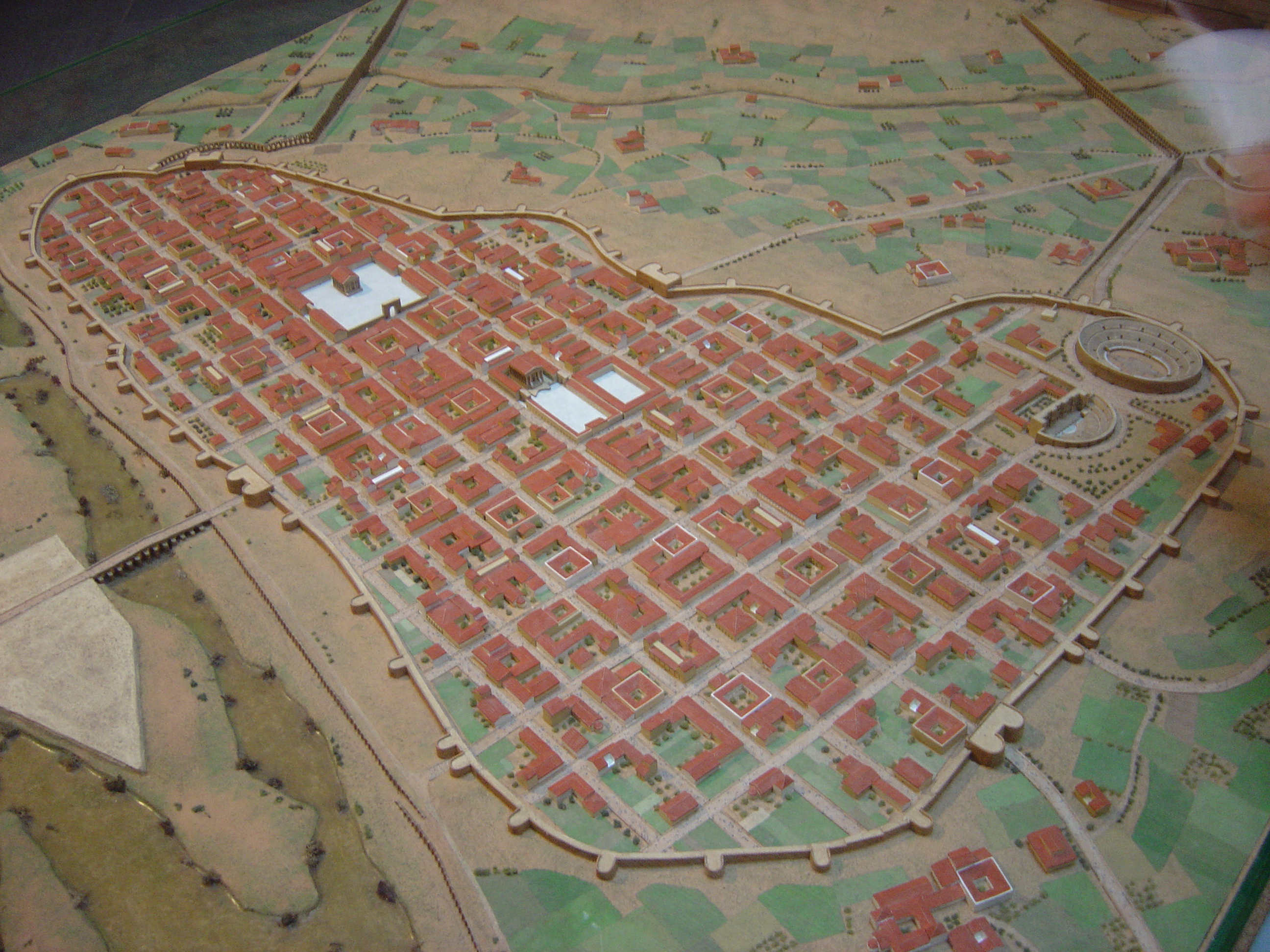
Las ciudades romanas estaban amuralladas y contaban con un foro, una gran plaza en la que se desarrollaba la vida pública. Además, existían otros edificios públicos y de ocio: teatro, anfiteatro, termas, circos.

File:Roman forum sketch up model.png https://commons.wikimedia.org/wiki/User:Mark_Miller


El fin del imperio.

Roma sobrevivió mil años, pero termino cayendo debido a factores políticos y económicos.
1. La crisis del siglo III.

La crisis del siglo III fue una grave crisis política, económica y social que estuvo a punto de provocar el fin del imperio.

Las razones de la crisis fueron:
  • Las invasiones de los pueblos barbaros, situados al norte de la frontera. Eran pueblos seminomadas organizados en tribus que penetran en el imperio.
  • Perdida de la autoridad imperial. Muchos emperadores fueron asesinados y los jefes militares aumentaron su poder, sustituyendo a los emperadores en las provincias
  • Crisis económica debido a: 


  1. La reducción del número de esclavos por la paralización de las conquistas, provoco un descenso de la producción.
  2. Los ataques barbaros paralizaron el comercio y las comunicaciones.
  3. La disminución de los ingresos del estado que hizo que no fuera capaz de pagar al Ejercito o mantener la administración.


2. El cristianismo.

La crisis favoreció la expansión del cristianismo por el Imperio. Los cristianos habían sido sufrido persecuciones en los siglos I y III d. c., por negarse a seguir el culto imperial, pero debido a la crisis social, sus valores basados en el amor al prójimo y la renuncia a los bienes materiales,  lo convirtieron en un elemento de cohesión:
  • 313, Edicto de Milán de Constantino autorizo el cristianismo.
  • Teodosio a finales del siglo IV convirtió el cristianismo en la religión oficial.
3. La división del imperio.
La crisis del siglo III hizo evidente la imposibilidad de mantener unido el imperio, por ello Teodosio en el año 395 d. c., decidió dividir el imperio entre sus dos hijos:
  • Imperio de Oriente, con capital en Constantinopla, más rico y poblado, consiguió sobrevivir.
  • Imperio de Occidente, más pobre, cayó por las invasiones.
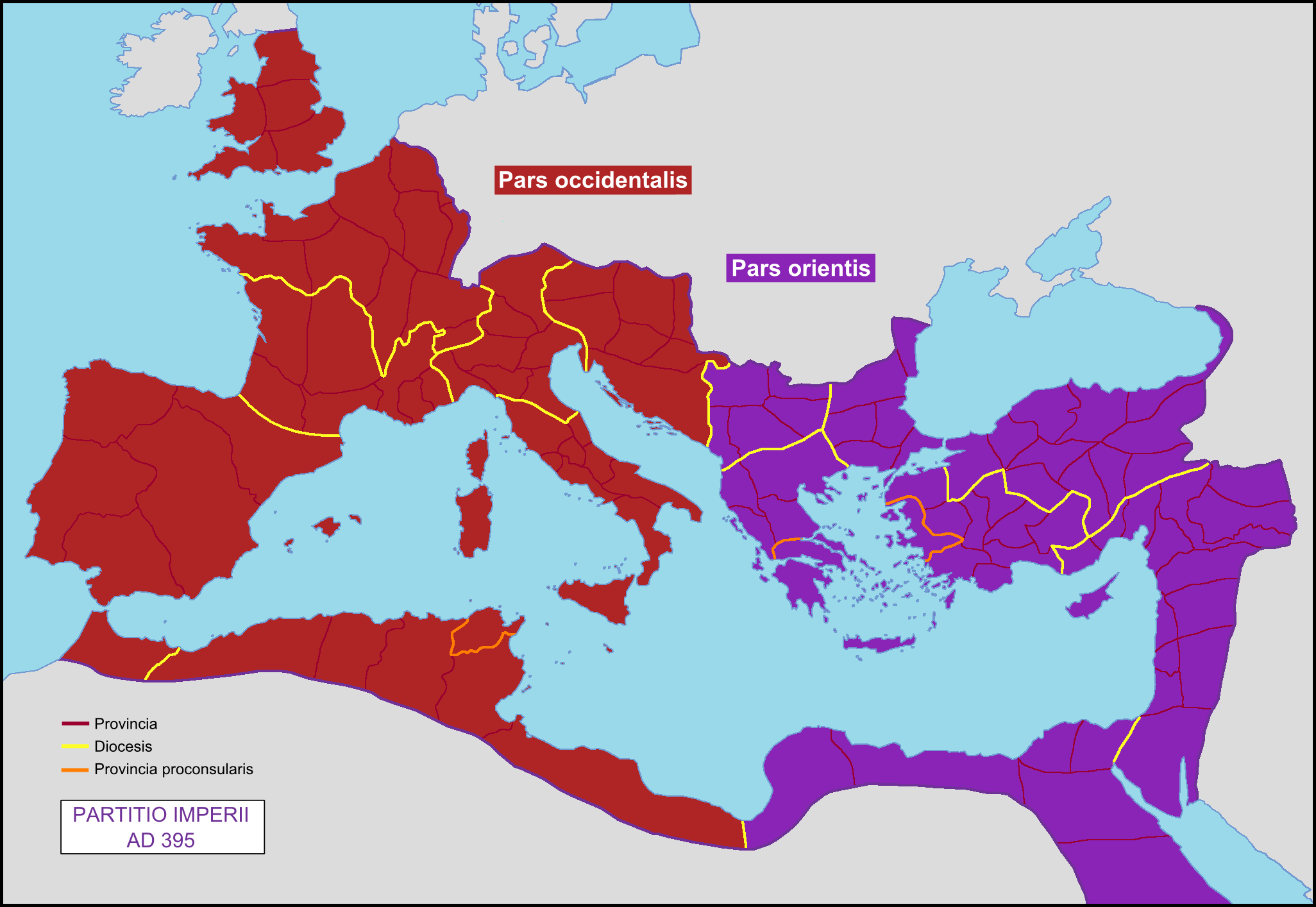
    División del imperio con Teodosio.

Las invasiones bárbaras:
  • En el siglo V, los pueblos germanos (godos, vándalos, alanos, suevos), empujados por los hunos procedente de Asia, asaltaron las fronteras del Imperio, instalándose en su interior y estableciendo reinos independientes.
  • Finalmente en el año 476 d.c., el último emperador romano, Romulo Augustulus, fue depuesto  por un jefe bárbaro, Odoacro, poniendo fin al imperio.


ROME HISTORY MANUEL DE FALLA (2018-2019)

1. THE MONARCHY
1. 1. The founding of Rome.
Rome was founded in 753 BC in the centre of the Italian Peninsula, a strategic territory between the eastern and the western Mediterranean area.
At the beginning of the eighth century BC this territory was inhabited by different people:
  • The Etruscan in the north and centre.
  • The Latins in Latium, in the centre.
  • The Greeks in the south, in Magna Graecia.
  • Italy circa 400 BC
1. 1. 1. The origins.
  1. Mythical origins: According to the legend Rome was founded by Romulus and Remus in the place where they were born. They were taken and nursed by a wolf. 
  2. Historical origins: In fact, in the mid-eighth century some tribes of Latin origin settled around the hills near the river Tiber because of:
  • protection provided by the river and the hills.
  • strategic location for trade, which linked the peninsula's northern and southern territories.
We can distingish three periods into the Roman history:
  • Monarchy (753 BC-509 BC)
  • Republic (509 BC-27 BC)
  • Empire (27 BC-476 AD)

1. 2. The monarchy:
In the beginning Rome was an absolute monarchy, but the king was given advice buy the senate an assembly composed of representatives of the patrician families.

There were seven kings: four Latins kings and three Etruscans. Etruscans occupied Rome during the sixth century BC. Etruscan domination ended in 509 BC when Tarquin the Proud was expelled after a revolt.

Economy: agriculture and cattle-raising.

Society was divided into two groups:
  • patricians, descendants of the first inhabitants of the city. They were considered citizens and controled most of the land.
  • plebeians, free people. Had no political rights but had to pay taxes and fight in the army.
 
2. THE REPUBLIC (509-27 BC).
2. 1. The republican form of government:

Rome was an oligarchy during the republican period. Th three main institutions of the republican system were:
  • Comitia or voting assemblies:
  1. Members:Roman citizens
  2. Duties: Passed laws, elected magistrates and decided about war and peace.
  • Senate:
  1. Members:300 members, who were former magistrates.
  2. Duties: Approved laws, Controlled magistrates, Decided on foreign policy.
  • Magistrates:
  1. Members: They were elected each year. The most important were the consuls.
  2. Duties: Controlled the government
2. 2. The fight over political rights:
Roman society was divided into two groups:
  • Patricians: the oligarchy.
  • Plebeians: The common people.
Origin of the conflict:
At the beginning of the Republic the plebeians paid taxes but had no access to political post, just the patricians could have them.
The conflict: for more than 200 years the plebeians fought to have equal political rights, they finally succeeded un the third century BC:
  • Law of the Twelve Tables, which were the first written roman laws.
  •  Creation of the Plebeian Tribunes that protected plebeian interests.
2. 3. Major conquests during the Republic:
During the Republic, Rome began to expand territorially with the help of a very well disciplined and organised army.
Phases of this expansion:
  • Domination of the Italian Peninsula: completed by the mid-third century BC.
  • Control over the western Mediterranean: Figthings against Carthage, the three Punic Wars. Second half of the third century.
  • Control over the eastern Mediterranean: They confronted Greece and the Hellenistic monarchies. Second to first century B.C.
  • Control over all the Mediterranean area: Conquest of Egypt, 30 BC. They call it Mare Nostrum. 
 
Rome in 264 B. C.

https://commons.wikimedia.org/wiki/User:Dzlinker https://upload.wikimedia.org/wikipedia/commons/3/35/Egypt%2C_Rome%2C_Carthage_and_Numidia.jpg
https://commons.wikimedia.org/wiki/File:Roman_Republic-44BC.png https://commons.wikimedia.org/w/index.php?title=User:Clip~commonswiki&action=edit&redlink=1
ROMAN REPUBLIC IN 45 BC.

Roman republic 30 B. C.


Consequences of the expansion:
Positive: The conquests provided raw materials, land and people.
Negatives:
  • Social crisis:
  1. The powerful class profited most from the conquests, receiving large plots of land and buying slaves.
  2. Peasants farmers were ruined because they had to serve in the army and could not compete with large landowners.
  • Political crisis: Civil wars started between the generals who wanted power. In 48 BC Julius Caesar was made dictator for life. 
The Republican Army: 


  1.  The basis of the Roman army, the legions. Formed from between 4,200 and 6,000 soldiers and 400 on horseback. The backbone of the legion was the foot soldier, the legionaries.
  2. The evolution of the army:
  • During the Republic, all Roman citizens had to serve in the army. The soldiers receive no salary and had to take their own weapons.
  • In later times, there was a permanent army with professional soldiers. The state pay tem and provide them with weapons.
    Roman legionnaries (modern reconstruction). Work in public domain.

Roman legionary's equipment.


3. THE ROMAN EMPIRE (27 BC-476 AD)

3. 1. The Empire´s system of government:
After Julius Caesar´s death there was a civil war that ended with the triumph of Octavio Augusto, his nephew. In 27 BC the Senate granted him practically complete power, instituting a new form of government, the Empire. The institutions of the Republic and the Senate continued to exist but under the control of the emperor.
3. 2. The Pax Romana.
The Pax Romana was the period between the first and the second Century AD. The Empire reached its maximum expansion and enjoyed peace inside its borders. The Romans divided the Empire into provinces under the rule of a governor. Under emperor Trajanus the fronters reached the British Isles, the rivers Rhine and Danube, the Caucasus and the Tigris, and the Sahara desert.
Hadrian's Wall ruins, built to protect the Northern frontier of the Roman Britian.
3. 3. Romanization:
As the Romans conquered, they introduced Romanisation, the process through which the conquered people, the barbarians, assimilated the culture of the conquerors. The instruments of Romanisation were: the towns, the Latin language and the roads.


File:Hispania roads.svg
 https://commons.wikimedia.org/wiki/User:Rodelar


3. 4. The crisis of the third century:
During the thrid century took place a political, economic and social crisis that almost destroyed the empire:
  • Political crisis:
  1. The Roman legions suffered their first defeats by the Barbarians, the frontiers were no longer safe.
  2. The military chiefs began to have control over the emperor.
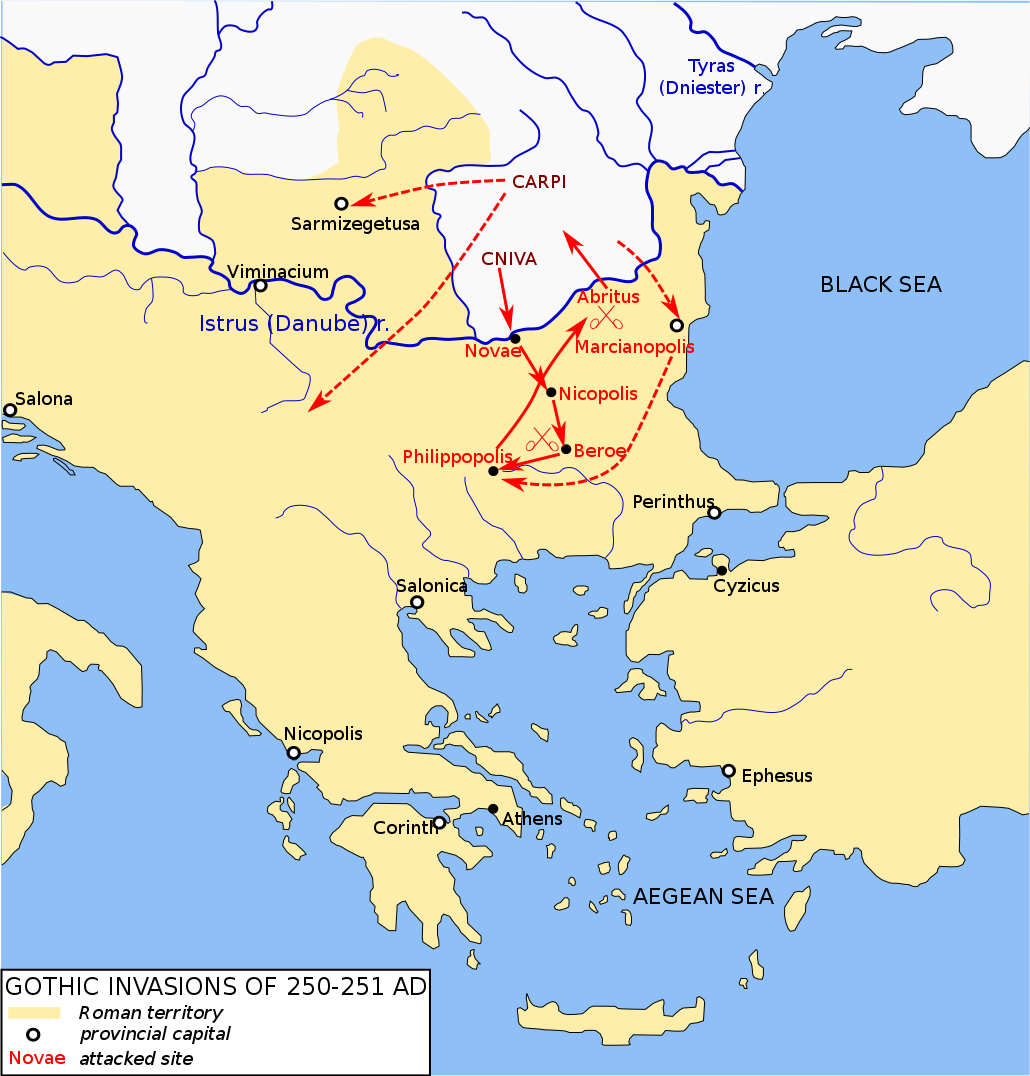
    In 260 AD, a military commander, Postumus, proclaimed himself emperor and ruled for ten years over Galia, Hispania and Britannia. https://en.wikipedia.org/wiki/File:Map_of_the_Gallic_Empire,_260_AD.jpg https://en.wikipedia.org/wiki/User:Aurelian272

    MAP OF THE GOTHIC INVASIONS DURING THE THIRD CENTURY.

    File:GothicInvasions250-251-en.svg https://commons.wikimedia.org/wiki/User:Dipa1965


    Between 238 AD and 285 AD there were 25 emperors, and most of them were killed.2:00-4:00


  • Economic crisis: As the conquest ended there were fewer slaves to work and agricultural and mineral production, and commerce dropped, as a consequence the Empire became poorer.
  • Social crisis: Taxes increased and this caused migration from the towns to the country, as a consequence the Empire became ruralised. 
 In order to improve the administration, Theodosius I divided the empire in two parts:
  • the Western Roman Empire with capital in Rome
  • the Eastern Roman Empire wih capital in Constantionple, richer and with more population.
Finally in the 5th century, the germanic peoples invaded the Western Empire and in 476 AD, the last roman emperor, Romulus Augustulus was deposed.

Division of the empire by Theodosius I, 395 AD. Licencia: Dominio Público.


File:Invasions_of_the_Roman_Empire_1.png User:MapMaster License: (CC BY-SA 2.5)


4. THE ECONOMY

Slavery: The Roman economy was built on the generalised use of slaves to work in agricultural and urban activities.
Agriculture:was the main economic activity and it was based on the farming of the three Mediterranean crops: cereals, vines and olive trees.
The Romans introduce the “aratrum” or crooked plough throughout the Empire
Division of the land:
  • Small properties cultivated by their owners
  • Large estates, “villas”, worked by slaves which were divided into two parts:
  1. The lord house in the centre of the estate, luxurious and richly decorated, with mosaics and statues.
  2. Storehouse, barns, furnaces and all kind of workshops to cover the needs of the large agricultural landowner
Farming: Based on sheep, goats, donkeys and horses
The mining industry and crafts:
Mining was an important activity in the Empire. Many minerals were found; gold, silver, iron, coal and tin. The mines belonged to the state, which rented them out to individuals. The workforce was all slaves.
Craftwork developed considerably. 
There  were large workshops with slaves, or in smaller workshops where the members formed associations to defend their own interests 
Food processing was very important: oil, wine and salted fish.
5. ROMAN SOCIETY
5. 1. The citizens:
According to the political rights were divided into two groups during the Monarchy and the Republic: plebeian and patrician.
Later during the Empire they were divided according to their wealth:
  • Honestiores that were the wealthiest.
  • Humiliores, plebeians with a low social status, both in the city and the country.
5. 2. The non-citizens

People who had no right to citizenship:
  • Conquered populations until 212 AD, when they were granted citizenship.
  • Foreigners that came from outside the Empire. Most of them were traders or artisans.
  • Freedmen, slaves that had been freed by their owners.
  • Slaves, they had no rights. They were war prisoners, people who could not pay their debts and slave's children.


5. 2. Life in an ancient Roman city.


  • During the Roman Empire cities became the centre of political, administrative, economic and cultural life. 
  • Most of them were walled and followed the plan of the camps of the roman legions.
  • Had two main streets: the decumanus maximus and the cardo maximus.


6. ROMAN RELIGION AND CHRISTIANITY

6. 1. Roman gods and worship. 


There were two kinds of religion.
Private religion:
Took place within the family. They worshipped: 
  • The Lares and the Penates, household gods
  • Manes, the spirits of ancestors.
In every house there was a Lararium: a domestic altar, where the head of the house, the “pater familia”, made offering.
Official religion:
Based on the worship of the gods and, from the first century AD onwards, on the worship of the Emperor. After the conquest of Greece the Roman gods were assimilated with the Greek gods. Romans were very tolerant, they incorporated the gods of the conquered people into the Roman pantheon.


6. 2. Birth and expansion of Christianity:
The birth of Christianity:
It had its origin in the first century in Palestine. It was a new religion preached by Jesus of Nazareth:
  • A Jew born in Bethlehem in the time of Augustus.
  • He claimed to be the son of God.
  • With his disciples, the apostles, he preached around Palestine a message of equality and love for one´s neighbour.
The expansion of Christianity in the Empire:
  • Christians persecution. In the early years they were persecuted by the authorities because they refused to worship the Emperor due to their monotheism. Christians had to practice their rituals secretly. 
  • Edict of Milan, 313: the Emperor Constantine authorized Christians to practice their religion.
  • Edict of Thessalonica, 380: The Emperor Theodosius declared Christianity the official religion of the Empire

7. ROMAN ART. ARCHITECTURE.

7. 1. Characteristics.

  • Roman architecture had a practical purpose. They created buildings to meet the needs of the population.
  • The building materials were brick, stone, marble and concrete: a mixture of limestone, gravel and sand that hardens with water.
  • Use of Greek architectonic orders, as well as two furher orders of their own invention:

  1. tuscan, which is similar to the Doric order, but has a base.
  2. composite, which has a capital with volutes and achantus leaf decoration.


Composite order. File:Composite_capital,_Palace_of_Justice_(today_Ethnographic_Museum),_Budapest.jpg User:József_Rozsnyai https://creativecommons.org/licenses/by-sa/4.0/