Etiquetas

1ºBACHILLERATO (2) 1ºBACHILLERATO PENDIENTES (6) 1ºESO (111) 1ºESO GEOGRAFÍA GEOGRAPHY RECUPERACIÓN (1) 2018-2019 (2) 2ºESO (1) 3ºESO (31) 4ºESO (13) 4ºESO UNIDAD 2. LAS REVOLUCIONES LIBERALES UNIDAD 3. LA REVOLUCIÓN INDUSTRIAL. HISTORIA (1) ACTIVIDADES (1) ADAPTACIÓN CURRICULAR (3) ADAPTACIÓN CURRICULAR. (2) ANCIENT (1) ANCIENT EGYPT (1) ANCIENT GREECE (2) BILINGUAL (57) BYZANTIUM (1) CHARLEMAGNE (1) EGIPTO (3) Geografía (39) GEOGRAPHY (35) GRECÍA (1) GREECE (2) HISTORIA (54) HISTORIA MODERNA (1) HISTORIA. UNIDAD 8. MESOPOTAMIA. (1) HISTORY (24) HISTORY UNIT 7 PREHISTORY (1) IBERIAN PENINSULA (1) LA GANADERIA (2) LA PESCA Y LA SILVICULTURA. (1) MANUEL DE FALLA (5) MESOPOTAMIA (4) PENDIENTES (1) PREHISTORIA (2) PREHISTORY (1) RECUPERACIÓN (3) RESUMEN. (1) ROMA (2) ROME (2) TALLER DE AMPLIACIÓN. (1) TEMA 5. EL IMPERIALISMO Y LA PRIMERA GUERRA MUNDIAL. (1) THE EARTH'S BIOCLIMATES (1) UNIDAD 1. EL SIGLO XVIII (2) UNIDAD 10. EL RENACIMIENTO (4) UNIDAD 10. LA ANTIGUA GRECIA (2) UNIDAD 10. LAS PRIMERAS CIVILIZACIONES (2) UNIDAD 10. LAS PRIMERAS CIVILIZACIONES: MESOPOTAMIA Y EGIPTO. (4) UNIDAD 10. LAS PRIMERAS CIVILIZACIONES. (1) UNIDAD 11. ANTIGUA GRECIA. (1) UNIDAD 11. LA CIVILIZACIÓN GRIEGA. (1) UNIDAD 11. ROMA. (2) UNIDAD 12. COLONIZACIONES Y PUEBLO PRERROMANOS (1) UNIDAD 12. EL AUGE DEL IMPERIO DE LOS AUSTRIAS. (2) UNIDAD 2. EL RELIEVE DE LA TIERRA. (7) UNIDAD 2. LA ORGANIZACIÓN ECONÓMICA DE LAS SOCIEDADES. (7) UNIDAD 2. LAS REVOLUCIONES LIBERALES (1) UNIDAD 2. LAS REVOLUCIONES LIBERALES. (2) UNIDAD 3. EL RELIEVE DE LOS CONTINENTES (1) UNIDAD 3. LA AGRICULTURA (7) UNIDAD 3. LA HIDROSFERA: AGUA DULCE Y AGUA SALADA (4) UNIDAD 3. LA REVOLUCIÓN INDUSTRIAL (1) UNIDAD 4. ESPAÑA EN EL SIGLO XIX. (1) UNIDAD 4. LA ATMÓSFERA (1) UNIDAD 4. LA ATMÓSFERA. (4) UNIDAD 4. LA ESPAÑA DEL SIGLO XIX (1) UNIDAD 5. LOS CLIMAS DE LA TIERRA. (1) UNIDAD 6. EL MUNDO DE ENTREGUERRAS. (1) UNIDAD 9. EGIPTO (2) UNIDAD 9. EL NACIMIENTO DEL MUNDO MODERNO. (5) UNIDAD 9. LA PREHISTORIA (1) UNIDAD 9. LA PREHISTORIA. (4) UNIDAD. 4 LA REVOLUCIÓN INDUSTRIAL. (1) UNIT 1. THE EARTH (1) UNIT 1. THE EARTH. (6) UNIT 1. THE FRAGMENTATION OF THE ANCIENT WORLD (1) UNIT 1. THE START OF THE MODERN AGE. (1) UNIT 10. THE FIRST CIVILIZATIONS. (2) UNIT 12. ANCIENT ROME (1) UNIT 2. THE EARLY MODERN AGE IN SPAIN AND AMERICA. (1) UNIT 2. THE EARTH'S RELIEF. (1) UNIT 2. THE EARTH'S SURFACE. (4) UNIT 2. THE PRIMARY SECTOR (1) UNIT 3. THE 17th CENTURY IN EUROPE. (1) UNIT 3. THE EARTH'S PHYSICAL CHARACTERISTICS. (7) UNIT 3. THE HYDROSPHERE. (1) UNIT 3. THE TERTIARY SECTOR. SPACE AND ACTIVITIES. (1) UNIT 4. THE ATMOSPHERE (2) UNIT 4. THE ATMOSPHERE. (1) UNIT 4. THE CLIMATE AND BIOCLIMATIC ZONES. (6) UNIT 5. THE EARTH'S BIOCLIMATES. GEOGRAPHY (1) UNIT 5. THE EARTH'S MAJOR BIOCLIMATIC ZONES. (3) UNIT 6. SPAIN'S PHYSICAL ENVIROMENT AND BIOCLIMATES. (1) UNIT 7. PREHISTORY (1) UNIT 7. PREHISTORY. (8) UNIT 8. THE FIRST CIVILIZATIONS. (2) UNIT 9. ANCIENT EGYPT (1) VISIGOTHS (1)
Mostrando entradas con la etiqueta HISTORY. Mostrar todas las entradas

martes, 7 de enero de 2020

UNIT. 13. ANCIENT ROME (Tirso de Molina 2019-2020)

1. THE REPUBLIC.

1. 1. Cronology.

 We can distinguish three phases in the history of the roman civilization:
  • Monarchy from 753 B. C. to 509 B. C.
  • Republic from 509 B. C. to 30 B. C.
  • Empire from 30 B. C. to 476 A. D.

2. Los orígenes de la ciuda.
In the first millnium B.C. the Italian Peninsula was inhabited by different peoples:
  • etruscos en el norte; 
  • griegos en el sur; 
  • y sabinos, latinos, samnitas en el centro. 
En el centro de la península. el Lacio, apareció Roma, la ciudad que se convirtió en el centro de la civilización romana, sin embargo, hay que distinguir los orígenes míticos y los históricos de la ciudad.

2. 1. Los orígenes míticos.
Los romanos sintieron la necesidad de darle un origen mítico a su ciudad:
  • El poeta Virgilio escribió la Eneida en el siglo I a. c., en la que se afirmaba que el origen de Roma, estaba en Eneas, un semidiós troyano, hijo de la diosa Venus, que decidió establecerse en el Lacio después de la caída de Troya.
  • Según la leyenda, años más tarde, Rea Silvia, una descendiente de Eneas, tuvo dos hijos con el dios Marte: Rómulo y Remo, que fueron abandonados en el río Tiber. Los gemelos fueron amamantados por una loba y al crecer fundaron Roma, pero se pelearon y Rómulo mato a Remo, convirtiéndose en el primer rey de la ciudad.

Loba capitolina con Romulo y Remo. 
1. 2. Los orígenes históricos.
Archeological remains show that:
  •   in the 8th century BC, some latin tribes came together on top of the Palatine Hill on the bank of the River Tiber, a place that was easy to defend and well communicated.
  • In the 7th century BC, the latins occupied the seven hills around the River Tiber to protect themshelves from their enemies.
    Las siete colinas de Roma.
1. 3. The monarchy.
  • There were seven kings in Rome, the firsts four latin, the last three Etruscan (who occupied Latium).
  • Los reyes tenían todos los poderes: administraba justicia, dirigía el ejercito y era el sumo sacerdote. Gobernaba con el Senado, una asamblea formada por miembros de las grandes familias aristocráticas.
  • La economía era agrícola y ganadera, pero el comercio y la artesanía también eran muy importantes.


2. REPUBLICAN ROME, (6th to 1st century BC).

OrigIn: in 509 BC, the aristocratic families of Rome with the help of the people, ended the reign of the last Etruscan king, Tarquinius Superbus and Rome became a Republic.

2. 1. The fight for citizenship.

Casuse: In Rome there were two main social groups:
  • the patricians were a minority of aristocratic families (genes) who:
  1. made laws.
  2. exercised justice.
  3. monopolised public positions.
  • the plebeians, who were the majority of the population (peasants, artisans, traders). They had no political rights, buy had to paid taxes and join the army.
Bellow them were the women and foreigners who had no political rights., estaban los extranjeros, las mujeres y los esclavos, sin derechos políticos.

The plebeians fought for the same right as patricians for 200 years. By the 3rd they became roman citizes and obtained:
  • The right to chose a representative to defend their interest: the plebeian tribune..
  • A set of public writing laws: the Law of the Twelve Tables.
  • The right to marry patricians and to hold public poistions.

2. The republican goverment.


Roma era una oligarquía, tenían más poder los ciudadanos más ricos y los pobres no tenían acceso a las magistraturas.. 

There were three main institutions:
  • The senate, composed of 300 former magistrates. Was in charge of:
  1. foreing policy and finances.
  2. ratify the laws pass in the assemblies.
  • The magistrates who ruled in the name of the Senate and the people of Rome. There were two types:
  1. Superiors: cónsuls (ran the goverment and the army), pretors (justice) and censors (appointed the senators).
  2. Inferiors: aediles (ran the city), cuestors (collected taxes) and pebleian tribuen (cuold oppose the decisions of other magistrates).
  • The assemblies were made of up of citizens who voted for laws and electred magistrates. There were three types:
  • century assemby:
  1. divided citizens into 193 different groups according to wealth. The richs had most of the votes.
  2. elected supperior magistrates.
  • tribal assembly:
  1. divided citizens according to residence.
  2. elected inferior magistrates and the pebleian tribune.
  • curiate assembly:
  1. did not have a political role.

3. The territorial expansion and the crisis of the Republic.

3. 1. Phase of the territorial expanion.

The Roman Republic expanded in several phases:
  • From 500 to 250 BC it conquered the Italian Peninsula.
  • From  264 to 164 BC y II a. c, it conquered the Western Mediterranean.
  • From 2nd century BC to 1st centuriy AD, a. c. y I d. c. conquered the eastern Mediterranean, Gallia, Britannia and a part of Central Europe.

3. 2. The Roman army.

The Roman army was composed of all citizens between the ages of 17 and 60.
The basic military unit was the legion, whic was made up of 5.00 men.
Legionaries stayed in camps which were like small towns and often became the origin of cities.

3. 3. The crisis od the Republic.

The conequest created numerous problems:
  • Social inequalities. Some people became rich from the profit of war, the selling of prisoners and the explotation of large estates (latinfundia).
  • Social crisis. Many peasants lost their lands because they had to serve in the army. This provoked revolts, such as the one led by the Gracchi brothes (2nd century BC).
  • The Senate gave power to military commanders (dictators) to stop the revolts, but they began fighting each other, causing civil wars.

 3. 4. Julius Caesar.

Julius Caesar was elected consul in 59 BC, and governor of several provinces the next year.
He managed to conquer the Galia and with the support of the pebleians he became dictator in perpetuity in 44 BC.
Some senators though that he wante to become a king with the support of the plebeians and killed him in 44 BC.

Rome in 264 B. C.


https://commons.wikimedia.org/wiki/User:Dzlinker https://upload.wikimedia.org/wikipedia/commons/3/35/Egypt%2C_Rome%2C_Carthage_and_Numidia.jpg
https://commons.wikimedia.org/wiki/File:Roman_Republic-44BC.png https://commons.wikimedia.org/w/index.php?title=User:Clip~commonswiki&action=edit&redlink=1
ROMAN REPUBLIC IN 45 BC.

Roman republic 30 B. C.


The expansion of the Roman Empire.


4. THE ROMAN EMPIRE (1st century BC to 5th CENTURY AD).

4. 1. Una nueva forma de gobierno.
After Caesar's death, his adopted son Octavius won a civil war. He established a new form of goverment:
  • In 27 BC, the Senate named him Augustus (chosen by the gods).
  • he was the head of the army: Emperor.
  • most senior religious authority: Pontifex Maxinus.
  • He had all the powers: consul, passed the laws and appointed the Senate and the Assemblies.
The republican institutions (the Senate, magistrates and assemblies) continued to exist, but without power.

4. 2. The imperial cult.

When Augustus died, he was deified, starting the imperial cult. Romans were allowed to practise various religions but the Imperial Cult was obligatory to show that people were loyal to Rome.

4. 3. A period of prosperity (1st to 2nd century AD).

The 1st and 2nd centuries AD were a Golden Age for the Empire known as the Pax Romana, for 200, the Roman empire controlled a vast an peaceful territory due to:
  • a powerful army protected the borders (limites) from attacks by barbarians using walls.
  • the integration of the of the ocnquered peoples into Roman culture due to the road network, the economic prosperity, the growth of cities and the spread of the Latin language: romanization.

4. 4. Control of the territory.

The Empire was divided into provinces, which were ruled by a governor, elected by the senate or the emperor, and assisted by oficials. The governors were in charge of:
  • collect taxes.
  • judge crimes.
  • look after the cities.


Hadrian's Wall ruins, built to protect the Northern frontier of the Roman Britian.
3. 3. Romanization:


5. ROME.

Rome the capital city of the Roman empire was the biggest time of Antiquity with about a million inhabitants, most of them lived in crowned apartamente buildings (insulae).
In the center of the city, built around seven hills, were located the most important buildings:
  • temples
  • baths, complexes for personal hygiene and sports, with an open-air space for physical exercise and cold, warm and hot water pools for bathin.
  • circus for chariots races.
  • amphiteathre for gladiator fights.
  • theather.

6. THE ROMAN SOCIETY.

6. 1. Citizens: the rich and the poors.

From the 3th century AD, most of the free men were citizens. They had political rights and were protected by laws,but they were divided according to their wealth:
  • the nobles were senators, senior empire officials, rich plebeians with businesses and middle managers (equites).
  • Plebeians were the large masses of pesants and salaierd ubran dwellers. Many of them lifec on money and the amusements given by the State (bread and circuses).
However, there social mobility. Rich pebleian could become nobles.

6. 2. Women in Rome.

Roman women had limited rights and could not participate in politics. Families were patriarchal and the the pater familias had authority over his wive and childrens:
  •  higher-class women had their own fortunes and could manage propierty.
  • poorest women worked on land, in workshops and domestic service.

6. 3. Slaves and freemen.

 Slaves made up a half of the population of Rome. They did the mos difficult work, but also were teachers and administrators.
A slave could be freed and obtained Roman citizenship: libertos or freedmen.

6. 4. An urban society.

Roman society were based in cities. Roman cities were:
  • were home of the goverment.
  • were economic centres: artisanship and trade.
 All the roman cities had the same structure:
  • were surrounded by walls.
  • had a central square, the forum, which was the centre of political and religious life. 

8. THE FALL OF THE EMPIRE.

The Roman Empire entered 8. a serious crisis from the 3nd century AD onwards.
In the 5th century, the Empire broke up and the western part was conquered by Germanic peoples.

8. 1. The start of the crisis.

In the 3rd century the Empire experienced a crsis:
  • The territorial expansion stopped and the germanic people beyond the borders attacked the borders.
  • Economic crisis due to:
  1. lack of slaves.
  2. reduction of the agricultural production.
  3. stop of trade due to the barbarian attacks.
  • Revolts and assassination of, because the army was the only authority in the provinces.

  8. 3. Christianity: the religion of the empire.

  • Between the 1st and 3rd centuries AD, the Christians were persecuted and tortured because they refused to follow the impeiral cult.
  • From the 3rd century D, Christianity spreaded through the Empire as a result of the social crisis.
  • 313 AD, Emperor Constantine made Christianity legal (Edict of Milan).
  • At the end of the 4th century, Theodosius declared it the official religion.

 8. 4. The fall of the Western Roman Empire.

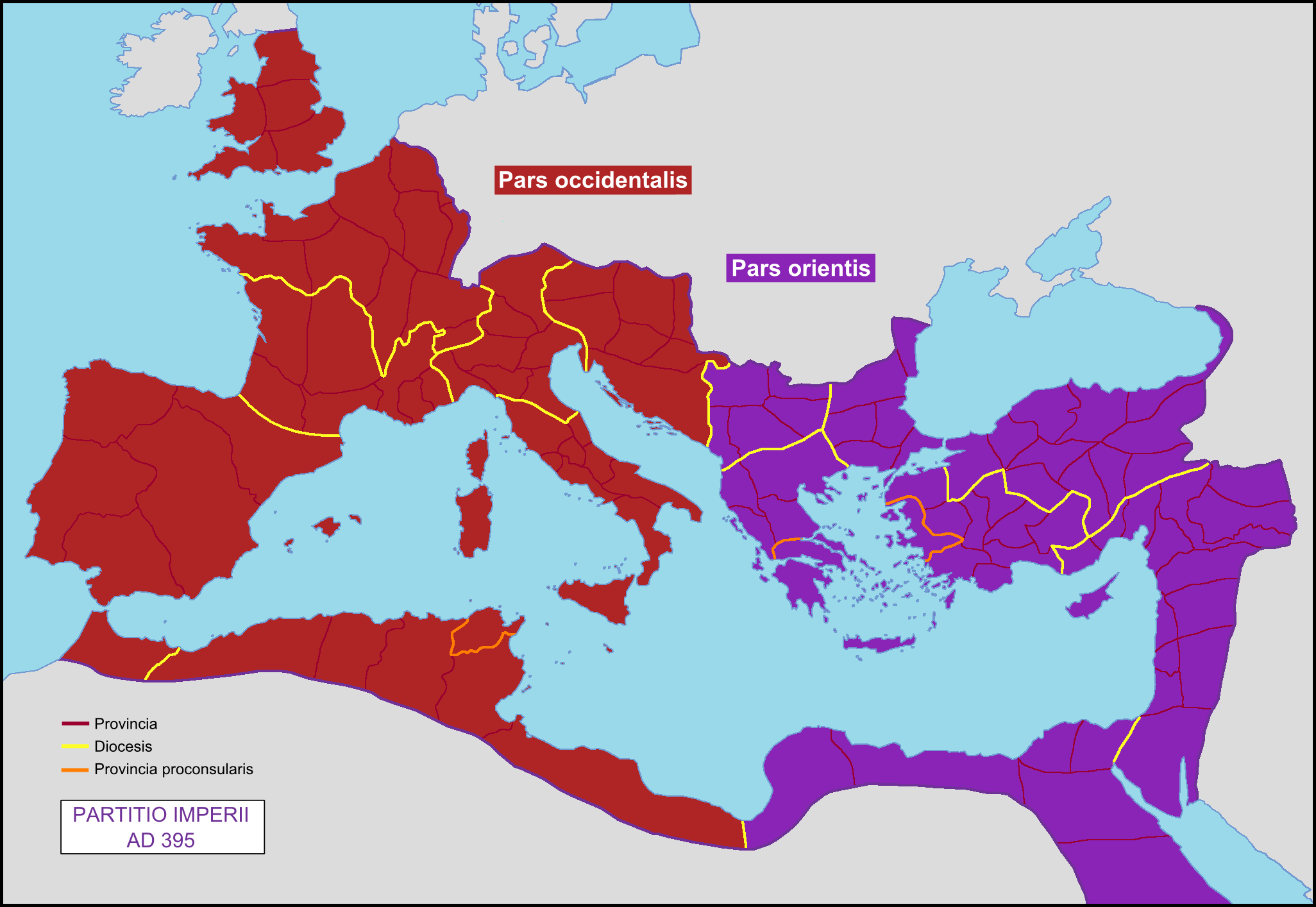
 In the 395 AD, the Empreor Theodosius divided the Empire into two parts, two make easier to defend:
  • Eastern Roman Empire, ruled by Arcadio, was the richest and most populous.
  • Western Roman Empire, ruled by Honorio, was the poorest part.
At the start of the 5th century, Germanic peoples enterde the Western Roman Empire, fleeing form a Central Asian people: the Huns. They settled and divided the empire into different kingdoms.
In 476 AD, Odoacer, a barbarian chief, removed the last roman empero, Romulus Ausgustus from power.
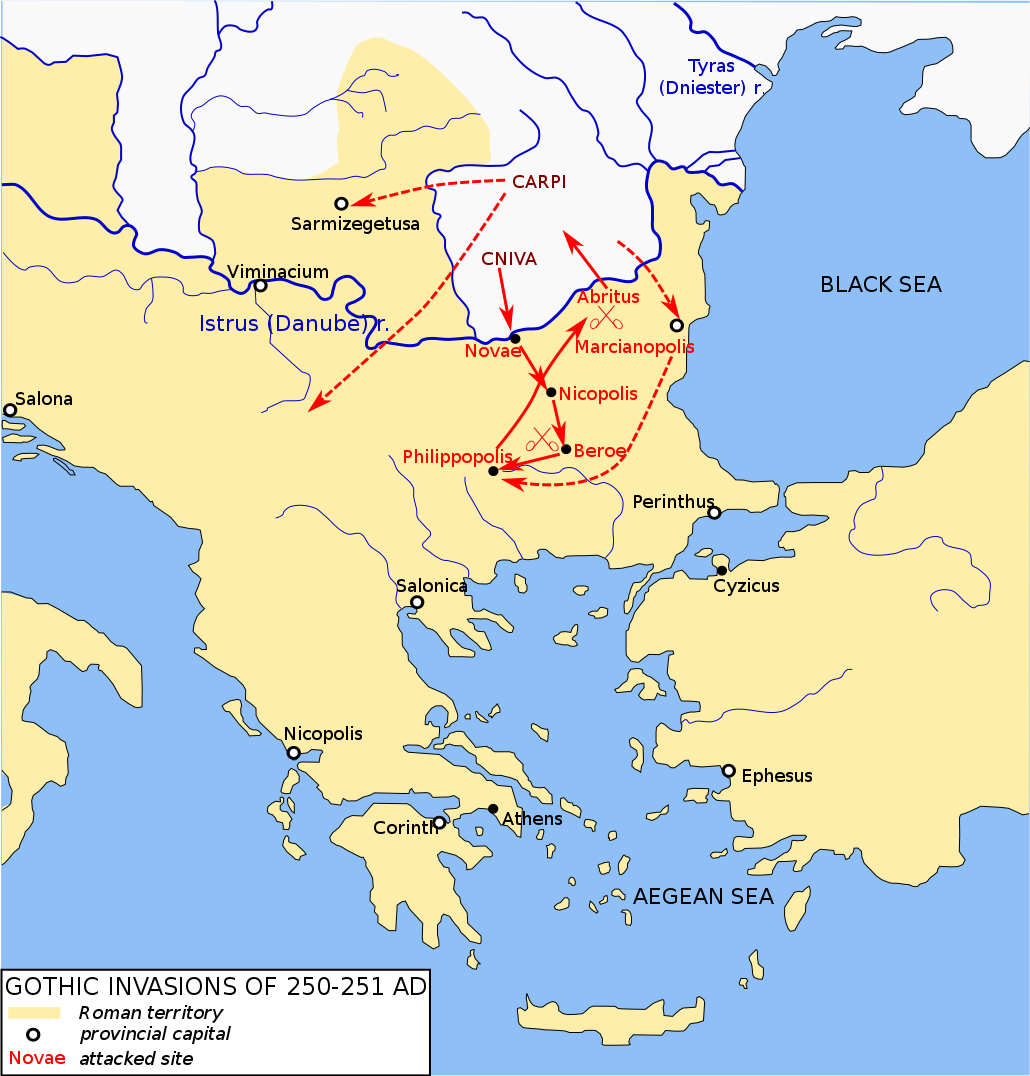
MAP OF THE GOTHIC INVASIONS DURING THE THIRD CENTURY.

File:GothicInvasions250-251-en.svg https://commons.wikimedia.org/wiki/User:Dipa1965


In 260 AD, a military commander, Postumus, proclaimed himself emperor and ruled for ten years over Galia, Hispania and Britannia. https://en.wikipedia.org/wiki/File:Map_of_the_Gallic_Empire,_260_AD.jpg https://en.wikipedia.org/wiki/User:Aurelian272


Division of the empire by Theodosius I, 395 AD. Licencia: Dominio Público.


File:Invasions_of_the_Roman_Empire_1.png User:MapMaster License: (CC BY-SA 2.5)


viernes, 3 de enero de 2020

UNIT 11. COLONISATION AND PRE-ROMAN CIVILISATIONS.

1. THE ORIGIN OF THE IBERIAN AN CELTIC PEOPLES.

By the start of the 1st millenium BC the peoples of the Iberian Penisula were still living in the Bronze Age, but between the years 1.000 and 500 BC, peoples from northern Europe (indoeuropeans) and Eastern Mediterranean (phoenicians and greeks) came to the Iberian Peninsula. As a result, two large groups formed: the Iberians and the Celts

1. 1. The indo-european peoples.

The Indoeuropeans came from the great planes of Central Europe and crossed over the Pyreness between the 10th and 5th centuries BC.
How was their way of life:
  • They worked with iron.
  • and economy based on ceral cultivation and grazing.
  • They cremated the dead and placed their ashes in urns.
 They reached the Peninsula in several waves, y a partir del siglo VIII a. c., ocuparon el Norte y el centro de la Península (celtas).

1. 2. Colonisation by the eastern mediterranean people.

During the 1st millenium BCpeoples from the Eastern Mediterranean founded colonies along the Mediterranean coast: greeks, phoenicians and carthaginians:
  • The Phoenician were merchants that came from today's Lebanon . From the 11th to the 8th century BC, they controlled the trade in the Mediterranean Sea.
  • Carthage was a phoenian colony in North Africa era una colonia fenicia, which in the 5th century BC became the dominat trade power in the Mediterranean Sea.

 1. 3. The formation of the celtic and iberian peoples.

Contact between the indigenous population and the new comers gave rise to the Celtic and Iberian Cultures.:
  • In the East and South of the Peninsula, the influence of Greeks, Phoenicians and Carthaginians gave rise to the Iberian culture.
  • In the North and the Center, the influence of the indoeuropeans gave rise to the Celtic and Celtiberian cultures.
These pre-Romans peoples were inhabiting the Iberian Peninsula when the Roman arrived.

2. THE PHOENICIANS, GREEKS AND CARTHAGINIANS.

The colonisers brought new knowledge and technological advances to the Iberian Peninsula:
  • Writing.
  • New crops (olives and grapes), agricultural techniques and domestic animals (chickens and cats).
  • The use of iron and mining techniques.
  • Fish salting.
  • Potter's wheel.
  • Use of money.

2. 1. Phoenician and Greek colonisation.

  • The Phoenicians settled in the south of the Iberian Peninsula. They founded Gadir (Cádiz) in 1.000 BC and other colonies in the south east.
  • The Greeks came from the city of Phocaea in the 7th century and founded colonies on the east coast like Emporion.
The Phoenicians and the Greeks traded with the indigenous population. They exchanged metals and salted products for manufactured goods (textiles, jewellery and ceramics).

2. 2. The Carthaginians.

From the 5th BC the Carthaginians fought against the Greeks to control the Iberian Coast. Finally took control of the trade in metals (tin and silver) and fish salting factories.
In the 3th century, the carthaginians occupied the east coast and the south of the Iberian Peninsula to recruit soldiers and acquire metals to fight against Rome.

2. 3. Phoenician and Punic art.

The main characteristics of the Phoenician art were:
  •  Egyptian and Assyrian influence.
  • Rigid and forward-facing.
  • Made in stone and bronze.
  • Had a religious function.

3. Tartessos.

Between the years 1.000 y el 500 BC the tartessian civilization developed in the south of the Iberian Peninsula.  This civilization dissapeared as a result of the exhaustion of the mines and the Carthaginesian conquest.

3. 1. Tartessos and its area of influence.

Tartessos extended out to the west of Andalusia and south of Extremadura, although its centre was located in the provinces of Huelva, Seville and Cadiz.

3. 2. Economic importance.

  • Tartessos was rich in silver, gold copper and iron mines and had workshops dedicated to the manufacture of metal objects.
  • Play a key role in the Atlantic routes from Galicia and the British Isles which supplied the eastern mediterranean it tin, silver and lead.
  • The trade with the Greeks and the Phoenicians, exchanging mineral products for luxury goods (perfumes, amber, ceramics and jewellery).

 3. 3. An aristocratic society.

  • There were an aristocracy that controlled the kingdom's territory, trade and wealth.
  • They had a writing system due to the Phoenician influence.
  • They worshipped eastern gods.

4. THE CELTS AND THE CELTIBERIANS.

We have to distinguish between:
  • celts who occupied the north and west of the Iberian Peninsula.
  • celtiberians, who occupied the Ebro Valley and the Meseta and were very influenced by the Iberian culture.

4. 1. The way of live of the celts.

They lived in villages with walls and moats located near sources of water and arable land. The houses were circular and were made of adobe.
Their eonomy was self-sufficient. They were nomadic farmers who made ceramics, woven wool products and metal tools. They did not trade with other peoples and did not use money.
They were organised into family clans; several clans formed a tribe which occupied a territory.

4. 2. Celtics and celtiberian culture.

Unlike the Celts, the Celtiberian practised writing.
They worshiped the Celtic deities and the Celtic funeral rites (cremation).

4. 3. Celtic art.

The main celtic works of art were:
  • Verracos: zoomorphic scultpures made from stone. Rough and simplified.
  • Gold and silver jewellery (neckrings, brooches) and weapons.
  • Objects with geometric decoration or stylised animal, plants or human figures.


Celtiberian writing.


Toros de Guisando.


5. IBERIAN PEOPLES.

The iberian culture was the result of the influence of the colonisers from eastern Mediterranean in the east and south of the Peninsula.

5. 1. Way of life.

 The iberians lived in fortified cities located in high places and near a water source. The houses were rectangular with adobe walls and roofs made of straw.
 The economy was based in:
  • rain-fed farming (cerals, olives, grapes and vegetables).
  • livestock farming (bulls, oxen, donkeys and horses).
  • artisanship: weaving and ceramics.
  • trade which resulted in the use of money.
The iberians were organised in traibes who shared the same languages. The society was hierarchical:
  • a warrior-like aristocracy.
  • artisans, merchants and soldiers.
  • farmers, miners, servants, slaves.

Culture and religion.

The iberians used an alphabet influcenced by the Phoenicians and the Greeks.
They had an aminist religions: they believed that the elements had spirits and adopted female divinities from the East.
They buried their deads near their towns along funerary gods.


6. IBERIAN ART.

The iberians developed very rich art forms, but the most representative was the sculpture and stone relief.

6. 1. Shrines.

Most of the shrines were:
  • located on high ground.
  • large complexes with protective walls, couryards and several buildings.
  • a small temple with one room and a central altar.

 6. 2. Necropoleis.

There were two types of tombs:
  • Underground tombs with a stela pillar: a pillar base that support another pillar on top of it.
  • In the south, chamber tombs covered with stone slabs.

6. 3. Votive offerings.

A votive offering is a figurine in the form of a human or animal, offered to the deity for protection or assistance.

6. 4. Sculptures and reliefs.

The main characteristics of the sculptures were:
  • had a clear phoenician or greek influence.
  • were made of sandstone or limestone.
  • were polychrome.
  • represented female figures (damas), warriors and real or imaginary animals.
  • figures were forward-facing with a blank expression.
  • were very detailed.
 The damas are female figures in the form of a bust (busto) or the whole body.


Dama de Baza, MAN. File: File:Museo_Arqueológico_Nacional_-_1969-68-155-123A_-_Dama_de_Baza_01.jpg Author: Relanzón, Santiago (photo) License: BY-SA 4.0


Dama de Elche.

Bicha de Balazote, MAN. File:Museo_Arqueológico_Nacional_-_18529_-_Bicha_de_Balazote_01.jpg Author: http://www.man.es/man/home.html License: CC BY-SA 4.0


domingo, 6 de octubre de 2019

UNIT 1. THE FRAGMENTATION OF THE ANCIENT WORLD.

1. THE FALL OF THE ROMAN EMPIRE.

The Germanic invasions of the 5th century destroyed the Western Roman Empire.
The fall of Rome, in 476 A. D. marks the beginning of the Middle Ages.

1. 1. The end of the Western Roman Empire.

In the early 5th century, a nomadic people from Asia, invaded Europe, led by their ruler Atila.

The Germanic peoples fled from the huns to the Western Roman Empire, invading it and creating various rival German Kingdoms:

  • The Ostrogoths: Italy and Dalmacia.
  • The Visigoths: south of Gaul and Hispania.
  • The Franks: Gaul
  • The Burgundians: eastern Gaul.
  • The Alemani: the Rhine.
  • The Angles and Saxons: Britannia.

1. 2. The germanic kingdoms.

The germanic peoples had no a writting language, laws or states. They were organised in tribes, led by a warrior-king, elected by the chiefs of the tribes.
Because of this, when they occupied a territory they became the ruling class but adopted Roman customs. Latin was the official language, Christianity the official reliigion and the kings had Roman counsellors and used Roman money.

1. 3. Breakup of the Mediterrenan unity.

By the 8th century, the Mediterranen was divided in three different cultural and religious areas:
  • The Western Roman Empire controlled by the Germanic Kingdoms. Official language: latin; official religion:
  • The Eastern Roman Empire became hellenised and adopted the Greek language and eastern political practices.
  • In the 7th century, the followers of Islamc conquered many territories formely governed by Rome.


Empire of Attila the Hun.


Fall ot the Western Roman Empire. File:Invasions_of_the_Roman_Empire_1.png https://commons.wikimedia.org/wiki/User:MapMaster License: (CC BY-SA 2.5)


Portrait of Theodoric the Great, a ostrogoth king. The barbarian kings represented themselves as romans.   File:Estimated_image_of_Theodoric_the_Great_in_the_Basilica_of_Sant'Apollinare_Nuovo._Ravenna,_Italy.jpg https://commons.wikimedia.org/wiki/User:%D0%92%D0%B2%D0%BB%D0%B0%D1%81%D0%B5%D0%BD%D0%BA%D0%BE CC BY-SA 3.0


Aureus of Theodoric the Great. The germanic kingdoms continued to use the roman coins.


2. THE VISIGOTH KINGDOM.

The visigoths were a germanic tribe that became mercenaries in the service of Rome and settled in Dacia in the 4th century.
  • In 409 AD several germanic peoples: the suevis, vandals and alans invaded the Iberian Peninsula and the visigoths came to the Peninsula as allies of Rome. They expeled the vandals and alans to Nort Africa.
  • By the middle of the 5th century they formed a kingdom in southern Gaul, the kingdom of Tolosa.
  • In 507 A. D., they were defeated by the franks (Battle of Voullie) and lost the south of Gaul. After that they organised a kingdom in the Iberian Peninsula with capital in Toledo that surived 200 years.

2. 2. Political organisation of the visigotich kingdom.

The Visigoths were a small minority (150.000 of a population of six million), but hold most of the land and were the privileged social group.
The visigothic kingdom was based on:
       An elected monarchy but supported by institutions such as:
  1. Aula Regia, an advisory body of nobles and clergy.
  2. Councils of Toledo, religious and civil assemblies were laws were made.
       Control of the entire Peninsula:
  1. Conquered the Suebi kingdom.
  2. Conquered the byzantine southern Spain.
  3. Stopped the franks in the north.
       Legal and religious unification of the Visigoths and Hispano-Romans:
  1. Repealing the banning of mixed marriages.
  2. Conversion of Recared to Catholicism.
  3. The Liber Iudicorum (654), a single law for the kingdom.


3. VALERIO BECOMES A PEASANT.

3. 1. Decline of the cities.

By the 5th century cities in Western Europe declined and started to loss population, because of three factors:
  • the attacks of the Germanic tribes
  • the reduction of the trade
  • the lack of jobs.
Many people decided to leave the cities and live in the countryside, working a plot of land in order to obtain food to eat.

3. 2. Apparition of servitude.

Only wealthy lawowners had armies and fortress to protect themselves, because of that many peasants agree to become serfs .A serf was a peasant that work the lands of a lord in exchange for protection.

3. 3. Ruralisation.

The peasants that fled the cities formed villages surrounded by palisades. They worked the land and kept domestic animals. They produce almost every they needed, becoming self-sufficient.

4. VISIGOTHIC ART AND CULTURE.

In the visigoth kingom took place a cultural fusión between the Hispano-Romans and the Visigoths.

4. 1. The importance of the Church.

  • The clergy was very important because they knew how to write and read:
  1. Became the greatest conservers of Roman Culture
  2. Worked as a advisers to the monarchs.
  • The Visigoths were Arians, they believed that Jesus was not the Son of God but was human, but they converted to Christianity in the 6th century.
  • In  Toledo were held councils, assemblies of bishops called by the king in which civil and religious issues were discussed. Council resolutions were passed by the king and became laws.

4. 2. The scholarly language: latin.

Latin was the language of the written language of the Visigothic Kingdom and many works of Greco-Latin antiquity were copied in Christian monasteries.

4. 3. Art.

Characteristics: 

The main characteristics were:
  • The fusión of Roman tradition with Germanic influences.
  • The importance of religious art.

Architecture

  • Small churches with stone walls and very few windows.
  • Use of materials from Roman buildings.
  • Use of basilica floor plan an corinthian capitals.
  • Use of horsehoe archs.

Metalwork.

Metalwork was the most important artistic expresion:
  • Precious metals (gold and silver), bronze and iron.
  • Use of varios techniques: casting, engraving, gilding, inlays.
  • Use of irregular pearls.

Recesvinto's crown. Archaeological Museum of Madrid.


Votive cross, Guarrazar's treasure. An example of a jewel with inlays.


Bronze visigoth brooch. Fichier:Fíbulas_aquiliformes_de_Alovera_(M.A.N._1975-49-130-53589)_01c.jpg Attribution: Larry Wentzel CC BY-2.0)


5. THE BYZANTINE EMPIRE.

After the fall of Rome, the Eastern Roman Empire survived and became the Byzantine Empire.
Its capital city was Constantinople, founded in 330 A.D. by the emperor Constantine on the Bosphorus Strait. Was surrounded by walls and had about 500.000 inhabitants.

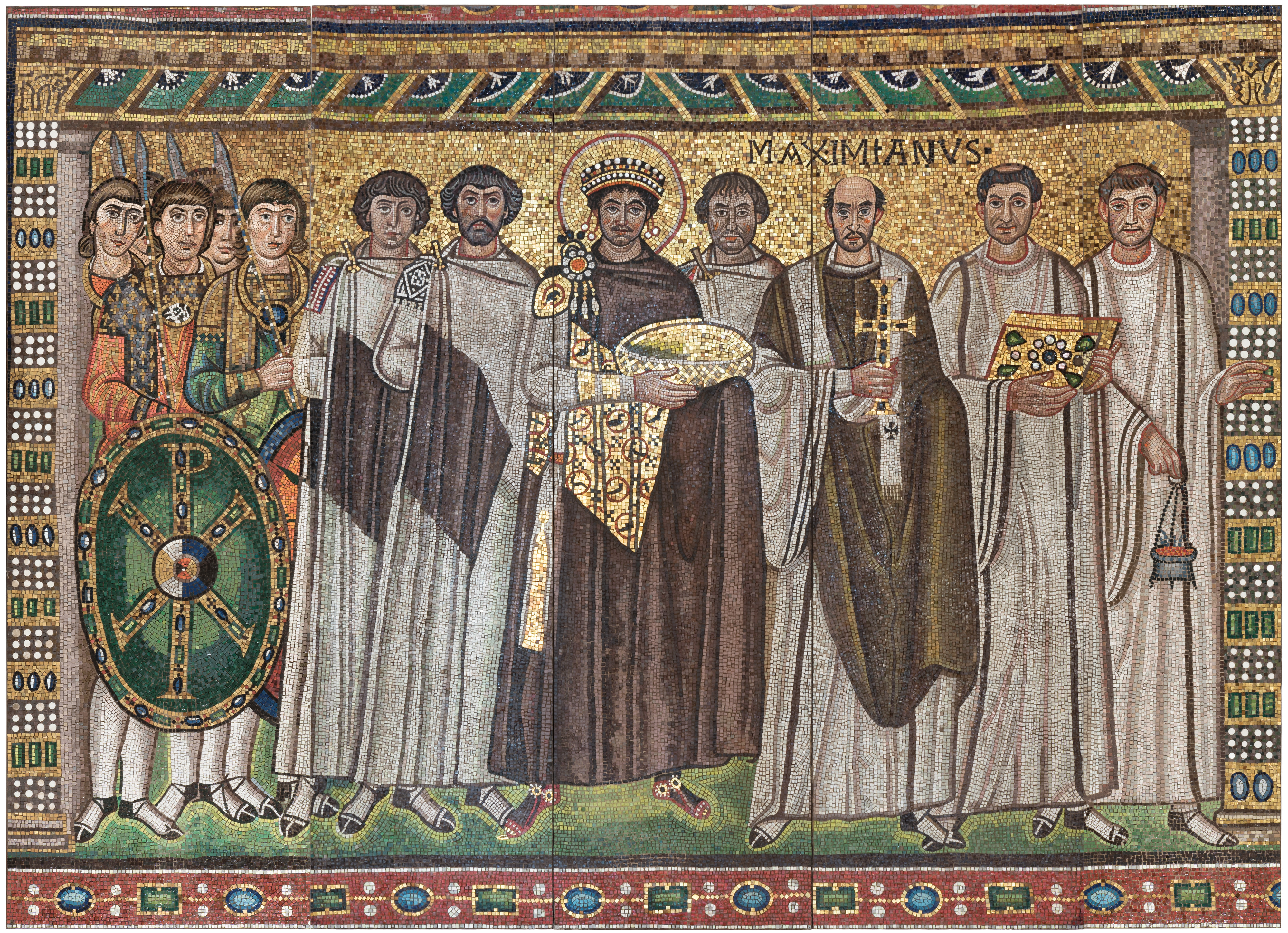
5. 1. The age of Justinian (527-565 AD)

The most important ruler of the Byzantine Empire was Justinian (in spanish, Justiniano) who wanted to restore the Roman Empire.
  • Justinian recovered some provinces of the Western Roman Empire: the Dalmatian Coast, Italy, the Balearic Islands
  • Justinian compiled a collection of Roman laws, the Justinian Code.

5. 2. The easternisation of the Empire.

  • 7th and 8th centuries:
  1.  The Empire lost a large part of its territories.
  2. Greek became the official language of the Empire.
  • 9th and 10th centuries (the second Golden age of Byzantium):
  1.    The empire recovered a part of its territory and the economy recovered.
  2.       The emperor (basileus) was considered the head of Christianity
  3.    The Western (Catholicism) and Eastern (Orthodox) Churchs broke up, due to the differences between religious ceremonies and the rejection of the autorithy of the Pope. (1.054 AD)
  4. The Orthodox Christianity and Byzantine culture spreaded among the Slavs (Bulgarian, Serbs, Russians), using the Cyrillic alphabet inventd by two monks Cyril and Methodius.

5. 3. The decline of Byzantium.

From the 11th century, Byzantium started to fall apart as a result of:
  • economic decline.
  • attacks of the Turks.
Finally, in 1453 AD, the Turks conquered Constantinople.

5. 4. Byzantine art.

Byzantine art was a mixture of Greco-Roman and eastern art.
  • Architecture:
  1. Use of classical features (columns, archsm domes) and materials (brick, stone, marble).
  2. Use of richly-coloured materials to decorate the walls.
  3. The most important byzantine momument is the cathedral of Hagia Sophia.
  • Painting: Icons, religious images painted on wooden panels and brightly colored.


The Byzantine Empire under Justinian. File:The_Byzantine_State_under_Justinian_I-es.svg Author: https://commons.wikimedia.org/wiki/User:Neuceu Lincese: (CC BY-SA 3.0)

The Byzantine Empire in the middle 9th century. File:Byzantine_Empire_842_AD.png Author: Author: https://commons.wikimedia.org/wiki/User:Neuceu Lincese: (CC BY-SA 3.0)


The Byzantine Empire in 1025 AD. File: https://upload.wikimedia.org/wikipedia/commons/0/0b/Byzantine_Empire_1025_AD.png Author: Ichthyovenator License: (CC BY-SA 4.0)

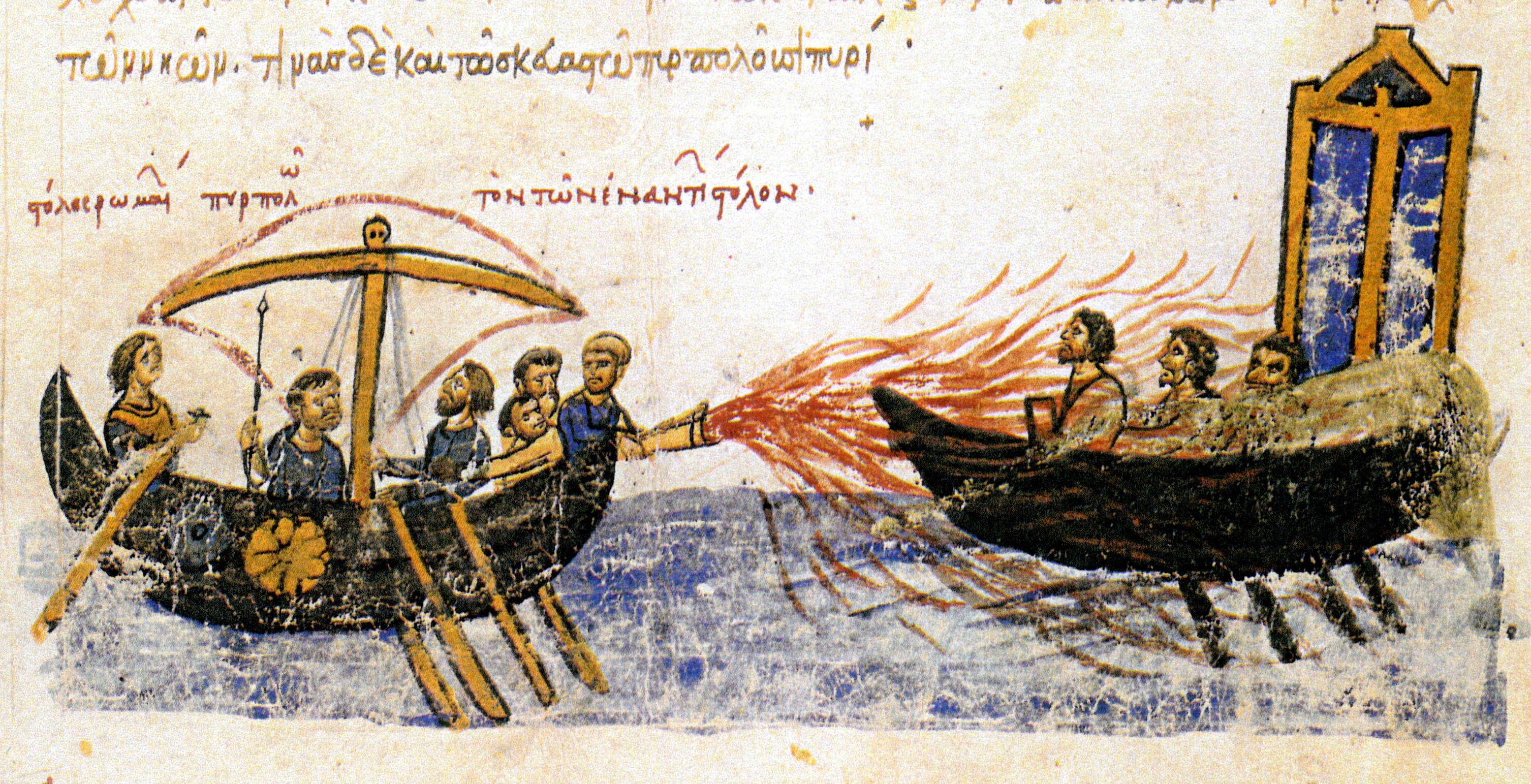
A Byzantine ship using the greek fire. The greek fire was the secret weapon of the Byzantine army. It was a mixture of flammable substances that could be use in flamethrowers or hand grenades.


Map of the different alphabets used in Europe.


6. THE CAROLINGIAN EMPIRE.


6. 1. The Frankish kingdom.

The frankish kingdom included modern-day France, and territories in Italy, Switzerland, Germany, Belgium and Holland.

  • In the early 7th century, a frankish noblemen, Charles Martel defeated the muslims in Poitier (732). 
  • His son, Pipin the Younger, became King of the franks and founded the Carolingian monarchy. 
  • His sucesor, Charles the Great (Charlemagne) conquered most of Western Roman Empire.

 6. 2. Charlemagne.

Charlemagne was important because he:

  • Conquered a large part of Western Europe: securing the borders of the empire.
  • Strengthened the union between political and religious power:
  1. Force everyone to convert to Christianity.
  2. Force the bishops to declare their loyalty to him.
  • He was crowned emperor by Pope Leo III in 800 A. D. 

6. 3. The carolingian renaissance.

Charlemagne began a cultural revival: the Carolingian Renaissance.

  • He established schools.
  • He reintroduced the teaching of Latin.
  •  Monks copied the works of Greco-Latin writers.


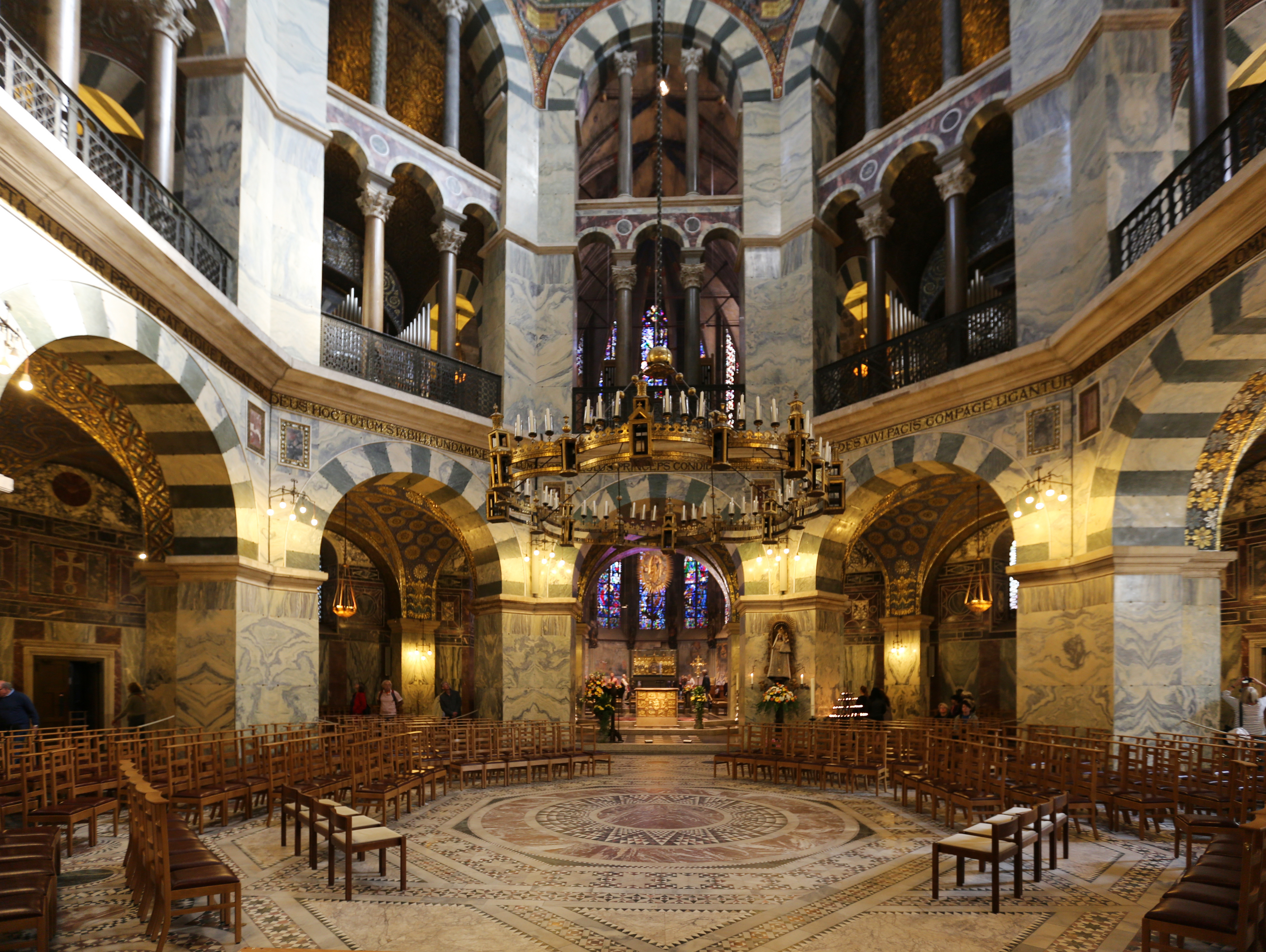
Palatine Chapel, the only surviving part of the Charelamgne's palace in Aachen. It has a heigh of 30 meters and a width of 16 meters. File:Aachen,_Innenarchitektur_der_Pfalzkapelle.jpg https://commons.wikimedia.org/wiki/User:HOWI CC BY-SA 3. 0


Signature of Charlemagne. Charlemagne did not learn to write and read until old age and his handwriting was poor during all his life.


7. HOW DID CHARLEMAGNE GOVERN HIS EMPIRE?

Charlemagne created a new way to governing his empire because:

7. 1. Organisisg the empire.

In order to govern his empire, Charlemagne gave land to the nobles in order to administer it on his behalf:
  • The  empire was divided into 250 counties, led by a count, a landowner appointed by the emperor who collected taxes and recruited soldiers.
  • The border areas, marcas, were led by a military commnader, a marquis. 
  • A corps of loyal commissioners, missi dominici, was established to enforce laws and control the counts and the marquis.
  • These posts were not inherited and the emperor could remove a noble from office.
  • The nobles (counts and marquis) and the clergy had to meet with Charlemagne in court once a year.

7. 2. Personal loyalty.

The system of goverment of the carolingian empire was based in a chain of personal relationships based on two principles:

  • loyalty: the nobles became the vassals and swore loyalty to the emperor, promisin respect and military aid.
  • protection: the emperor granted them lands and the right to govern them.
The counts and marquis received a oath of allegiance from lesser vassals and gave them lands in return.

7. 3. The birth of feudalism.

After the death of Charlemagne, this system of goverment changed because of two factors:
  • Division of the empire. After the death of Charlemagne's son, Louis the Pious, there were a civil war between his sons. Finally, they signed the Teatry of Verdun (843 AD), dividing the empire in three parts:
  1. Charles the Bald received the kingdom of Western France.
  2. Lothar, the kingdom of Middle France and the title of emperor.
  3. Louis the German the kingdom of Eastern France.
  • The 9th century invasions (vikings, magyars, saracens, etc.) caused terror and insecurity among the population and only the local lords could protect them because there was not a central power.
As a result, the counts and marquis became practically independent and the kings had only a theoretical power. 


Map of theTeatry of Verdun. File:Treaty_of_Verdun_-es.svg User:Trasamundo License: CC BY-SA 3.0


martes, 19 de marzo de 2019

UNIT 9. ANCIENT EGYPT. MANUEL DE FALLA 2018-2019

1. AN ANCIENT RIVER CIVILIZATION.

1, 1 The Nile.

Life in Ancient Egpyt was possible thanks to the waters of the Nile.
The source of the Nile is in Equatorial Africa, and runs through a narrow valley and flows into the Mediterranean Sea. We can divide the Nile in two natural regions:
  • The Upper Egpyt, the valley.
  • The Lower Egpyt, the delta.
Every summer the river's water level rose and flow the valley. When the waters retired, them left a thick layer of fertile slit perfect for agriculture.

1. 2. The origins of the egpyptian civilization.

Around 5.000 B. C., the neolithic settlements along the Nile river learnt how to predict tha nnual river flooding. They:
  • undertook drainage works.
  • built irrigation channels
  • learnt to use slit as natural fertiliser.
Because of this, settlements became independent cities ruled by nomarchs.
In 3.100 B. C., the legendary king Nemes unified  the territories of Lower and Upper Egypt.

1. 3. The historical periods.

We can divide the history of Ancient Egypt into several periods separates by intermediate periods of decline:
  • Old kingdom (3.100-2181 B. C. ). The capital was Memphis and they built the pyramids.
  • Middle kingdom (2.055-1.795 B.C.). The capital was Thebes and Nubia was conquered.
  • New kingdom (1.550-1.069 B. C. ). They conquered Syria and Palestina. Egypt was ruled by famous pharaophs such as: Akhenaton, Tuthankamon and Ramses II.
  • Late period (715-31 B.C.) Egpyt was conquered foreing peoples such as the assyrians, the persians and the greeks. 
Geography of Egypt.


The Nile river.


Ancient Egpyt geography.


Another video about the geography of Ancient Egypt.

The Nile river.


The major regions of Egypt.


2. Social and political organisation.

2. 1. Political organistaion of society. 

The egyptian king was called pharaoph. He was considered a living god, the early encarnation of Horus, the god of sky and had political, military and religious powers:
  • As a king he:
  1. made laws
  2. inspected hydraulic works.
  3. owned most of the land of Egypt.
  4. controlled the collecting of taxes.
  • As military leader led the army.
  • As religious leader he ordered the construction of temples to worship the gods.

He had several attributes that symbolized his powers:
  • The two crowns:
  1. The white crown of the Upper Egpyt.
  2. The red crown of the Lower Egypt.
  •  The crook and the flail:
  1. The crook, which symbolized the power of the pharaoph over his subjects.
  2. The flail, which symbolized his duty to destroy the enemies of Egpyt. 
  • The false beard, a symbol of inmortality.
  • The uareus, a symbol of the protection of the gods.

2. 2. A very hierarchical society.

The egyptian society was divided into several groups:
  • The upper strata included the pharaoph, the pharaoph's family, the nobility and the priests. They owned most of the lands:
  1. The nobility controlled most of senior roles in the administration and the army.
  2. The priests were in charge of worshiping the gods and manage the lands of the temples.
  • The intermediate strata included:
  1. wealthy merchants
  2. specialised artisans
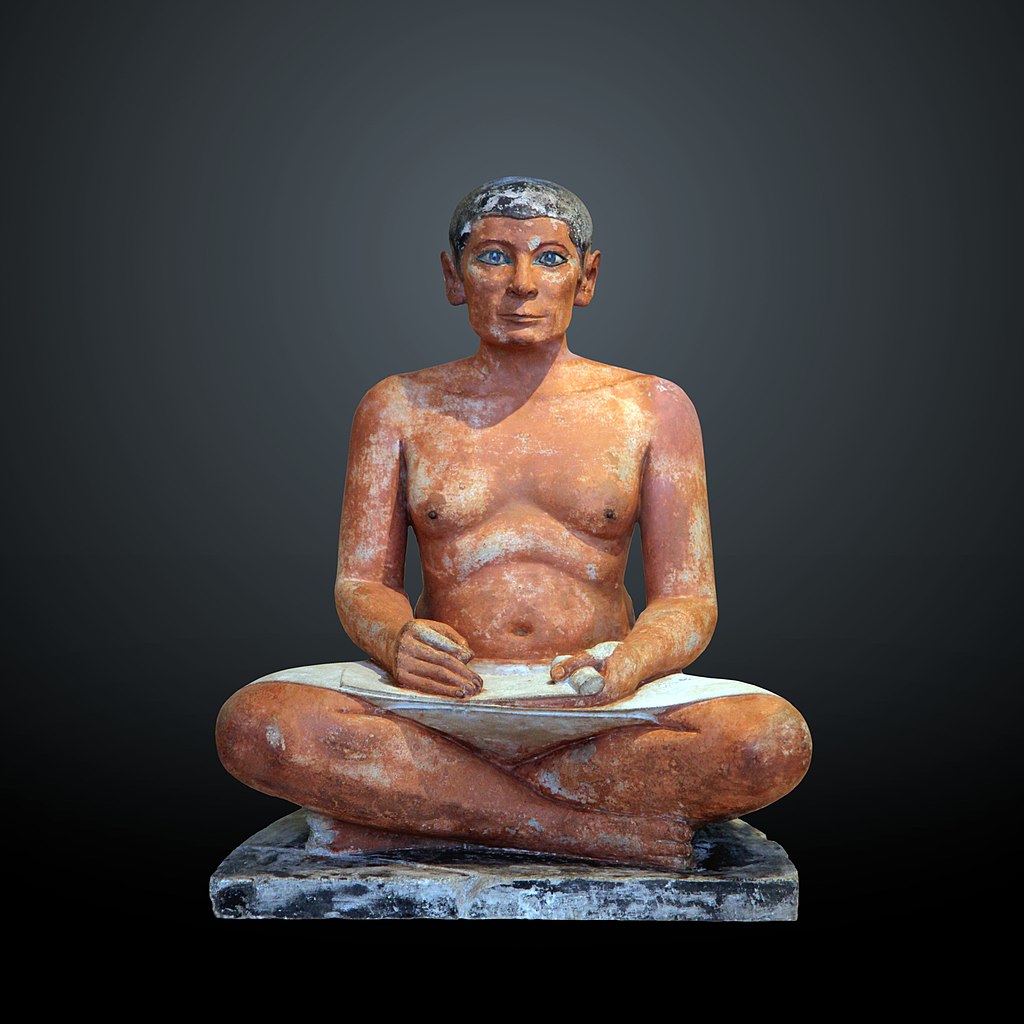
  3. scribes, people that knew how to read and write. They carried out roles in temples and palaces.
  • The lower strata that included free people:
  1. peasants that worked for the nobles or the temples.
  2. small-scale merchants.
  3. artisans
  4. soldiers.


3. The egyptian economy.

3. 1. Irrigation-based agriculture.

The main economic activity was irrigation-based agriculture. There were three seasons:
  1. Sowing (october to january). The water level dropped and the peasants sowed the fields with seeds.
  2. Harvest (february to may).The crops were harvested with wooden scythes during the dry season.
  3. Flooding (june to september). The water level rise and the banks of the river were flooded.
They also used a extensive network of irrigation channels.
  • The main crops were wheat and barley that were used to make bread and beer. Other crops were linen, papyrus, olives and fruit trees. 
  • The lands were a property of the pharaoph and were worked by the peasanst who had to pay tributes. Also they had to work building dykes, canals, temples and pyramids.

3. 2. Other economic activities.

Livestock farming: cows, donkeys, sheeps and poultry (in spanish aves de corral).
There were many artisans in the cities: stonemasons, carpenters, potters, weavers, etc.


Agriculture and seasons.


Domesticated animals.


4. Daily life.

4. 1. Egyptian dress.

We know what the Egyptians wore from the remains found in tombs or from reliefs and paintings, but most of them represented the pharaoph and the nobility.
  • Upper class men wore a wrap-around skirt that reached the knees and was fastened at the waist. Whereas workers wore a linen loincloth
  • Women wore a long tigh-fitting tunic that reached down to their ankles.
 Ancient egyptians would shave their bodies and used wigs. Egyptian women bathed frequently, wore eye make-up and used body lotions and perfumes.

4. 2. Dwellings.

Egyptian houses were built of adobe walls made with clay from the Nile.The roof was made of palm tree trunks tied together and bound together with a layer of clay. The roof was used for storage puroposes and for slepping on hot nights:
  • The poorest houses had only one floor and little forniture.
  • The houses belonging to the nobilty had two floors, rooms for servants and gardens woth palm trees and ponds. vivían en viviendas de dos plantas con habitaciones para los criados.

Ancient Egypt's medicine.


The egyptian household.


Fashion of Ancient Egypt.


5. Egyptian religion.

5. 1. The Egyptian gods.

The main characteristics of the egyptian religion were:
  • It was polytheistic religion: they believed in many gods.
  • Gods were represented with human and animal features.
  • A number of animals were considered to be sacred such as scarab bettles, cats, cows and cocodriles.
  • They use amulets to evade evil spirits
  • The main gods were:
  1. Amun-Ra, the Sun god.
  2. Horus, god of the sky.
  3. Anubis god of mummyfication.
  4. Hathor, goddess of love.
  5. Isis, wife of Osiris and goddes of fertility.
  6. Osiris, god of the dead.

  5. 2. Judgment of Osiris.

Egyptians believed in life after death. In order to obtain it, the decesaded has to pass the Judgment of Osiris. The heart of the deceased was placed in one side of a set of the scales an in the other the feather of the goddes Maat who simbolised justice. If the person was free of guilt the heart would weight less than the feather and the deceased would be rewarded with eternal life, but if the heart would weight more than the feather he would be devoured by a demon (Ammit).
The Book of the Dead was a set of formulas to assist the decesased on the journey to the afterlife.


The myth of Osiris.


Mummification.


How to make a mummy.


The book of the dead.


6. The cultural and artistic legacy.

6. 1. The hieroglyphic script.

Writing language appeared in Egypt in 3.250 B. C.
They used a hieroglyphic script with the following characteristics:
  1. It used drawings to express sounds, words or ideas (pictograms).
  2. Was used for officials or religious texts.
  3. Usually inscribed on stone or painted in walls.
  4.  A symplified version (hieratic) was used for writing on papyrus, fabric or wood.

6. 2. Architecture.

The main characteristics were:
  • Buildings were made of stone.
  • Had flat roofs supported by a lintel and columns 
  • Buildings were decorated with murals and sculptures. 
  • The main types of buildings were temples and tombs.
 a) Temples were divided in several parts:
  1. Avenue of the Sphinxes, where ceremonial processions entered the temple.
  2. pylon, a huge wall located at the sides of the main entrance.
  3. the courtyard, an open space surrounded by columns.
  4. hypostyle hall, a covered space with columns in which the people couldn't enter.
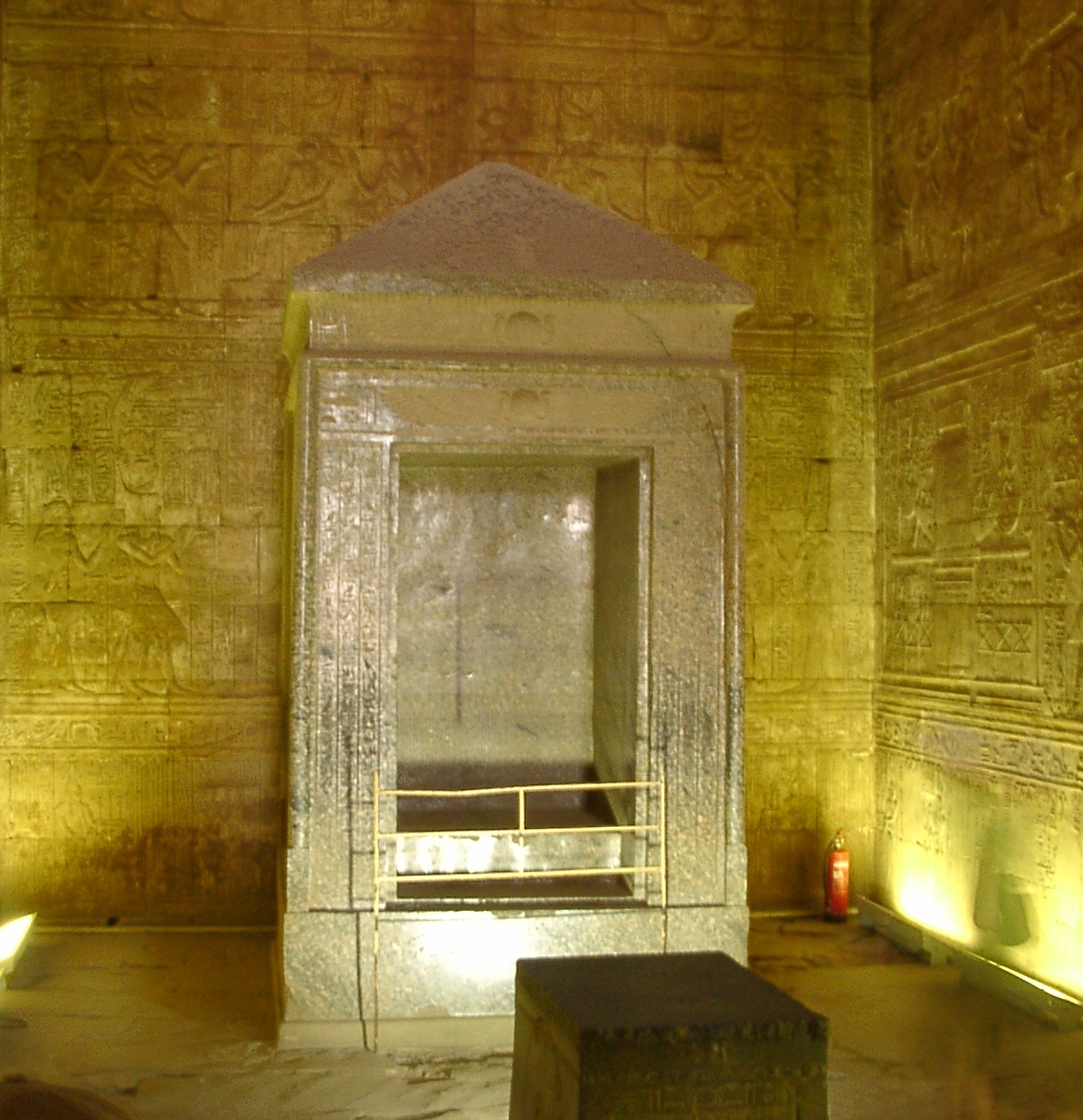
  5. the sanctuary, where the statue of the god was kept in the dark.
 b) Tombs
Tombs were built to ensure the eternal rest of the pharaophs, their families and other privileged groups. Tombs were decorated with scenes from everyday life and the Book of the Dead. Also funerray objects were placed in the tombs.
We can distinguish several types of tombs:
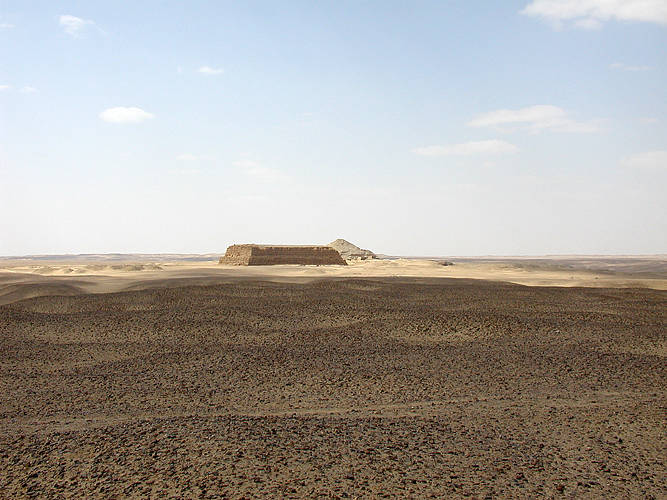
  • First, they built mastabas, simple, low rectangular structures with an underground burial chamber.
  • Later, they started to build pyramids, colossal structures with a rectangular base. Apart from the pharaoph's burial chamber, contained several false burial chambers and
  • Finally, they built hypogea

Sculpture.

 The main characteristics of the egyptian sculpture were:
  • Were made in stone.
  • Included statues and reliefs.
  • They represented:
  1. idealised pharaophs and gods on a large scale.
  2. nobles and scribes in a more natural manner and a smaller scale.

Painting.

  • Were used to decorate the walls of the temples and the interior of temples.
  • Frontalism: In paintings and reliefs, faces were shown in profile with the torso facing forward.
  • More important figures were larger than other figures.


File:Egyptian_Hieroglyphic_Alphabet_001.jpg Autor: User:لا_روسا&redirect=no License: CC BY-SA 4.0)


Avenue of sphinx, temple of Karnak.


Pylon of the Edfu Temple.


Courtyard, temple of Edfu. File: GD-EG-Efou022.JPG User: Nefermaat. (CC BY-SA 2.5)


Hypostyle hall, temple of Edfu. File: Edfu Temple 032010 29.jpg User: MatthiasKabel (CC BY-SA 3.0)

Sanctuary, temple of Edfu. File:Edfu naos.jpg User:HoremWeb (CC BY-SA 4.0)


Mastaba of Shepseskaf. File:Mastaba-faraoun-1.jpg Jon Bodsworth - http://www.egyptarchive.co.uk/html/el-faraun_01.html  


Gyza pyramid cmplex, from left to right: Khufu's pyramid (in spanish, Keops), Khafre's pyramid (in spanish, Kefren) and Menkaure's pyramid (in spanish, Micerinos).

Originally, the sides of the pyramids were completely smooth, because them were covered with slabs of polished stone.


An example of hypogea, the funerary temple of Hatshesup.


The interior of the tomb of Taousertet and Sethnakht in the Valley of the kings.


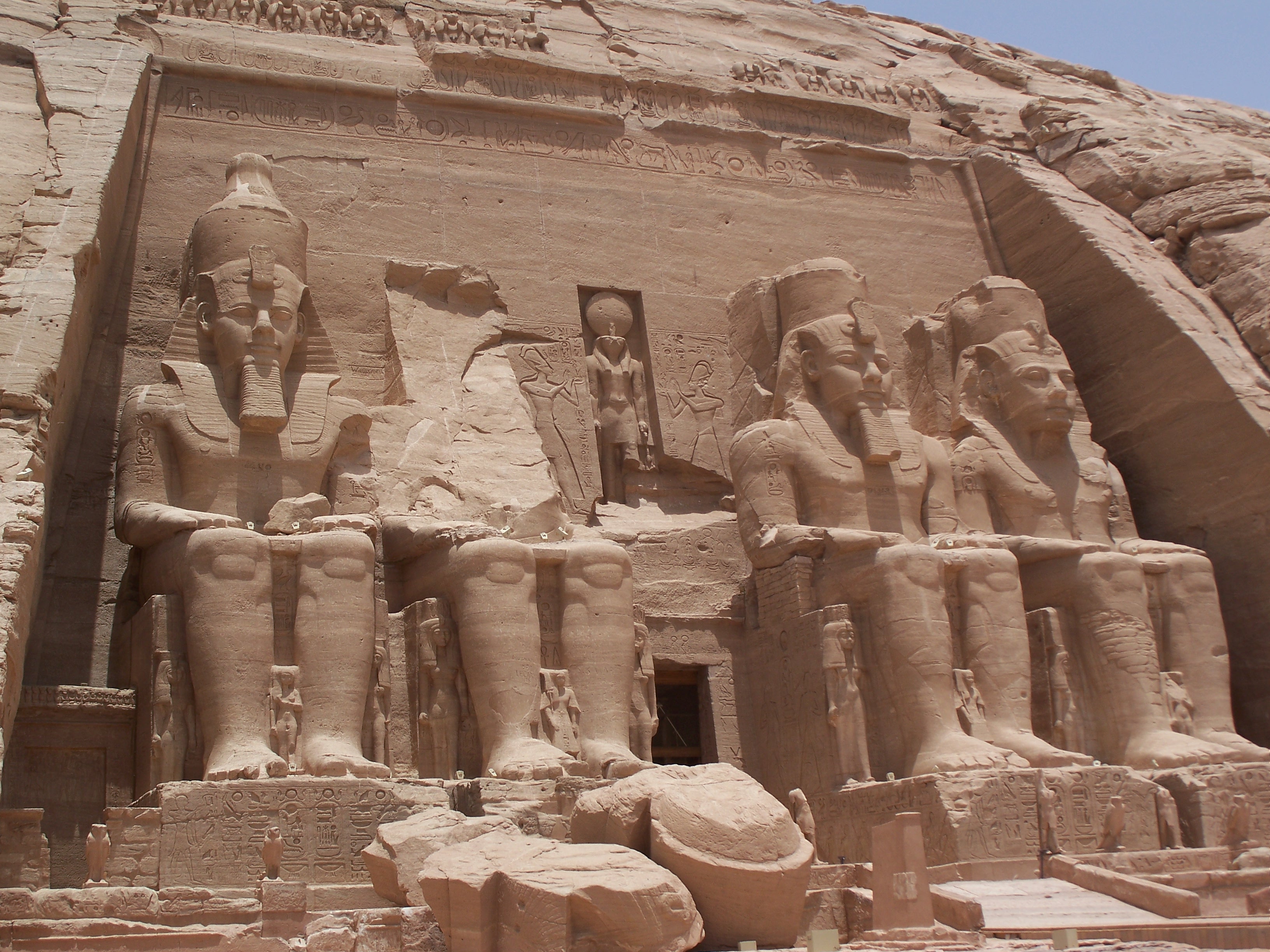
Sculptures of Ramesses II in the temple of Abu Simbel.


Frontalismo: el cuerpo y la cabeza se representa de perfil mientras que los hombros y los ojos aparecen representados de frente.


Spoken ancient Egpyt (numbers, gods and hieroglyphs).


The Rosetta Stone.


Hieroglyphs.


Temples of rituals


The pyramid of Djoser.


The great pyramid of Gizah.


Inside the Great Pyramid of Giza.


Inside the Great Pyramid of Giza